As an Amazon Associate I earn a small commission from qualifying purchases made using links from this website.
Have you ever dreamed of growing fresh veggies right in your living room, but your space feels too cramped? That’s where a vertical hydroponic tower comes in. This innovative setup lets you stack plants upward, making the most of every inch without needing a big backyard. It’s perfect for urban dwellers, apartment renters, or anyone short on room but big on fresh produce.
In this post, we’ll dive into everything you need to know about the vertical hydroponic tower. From how it works to tips for getting started, we’ll cover it all. Whether you’re a newbie or looking to level up your gardening game, these systems offer an effortless way to enjoy homegrown greens year-round.
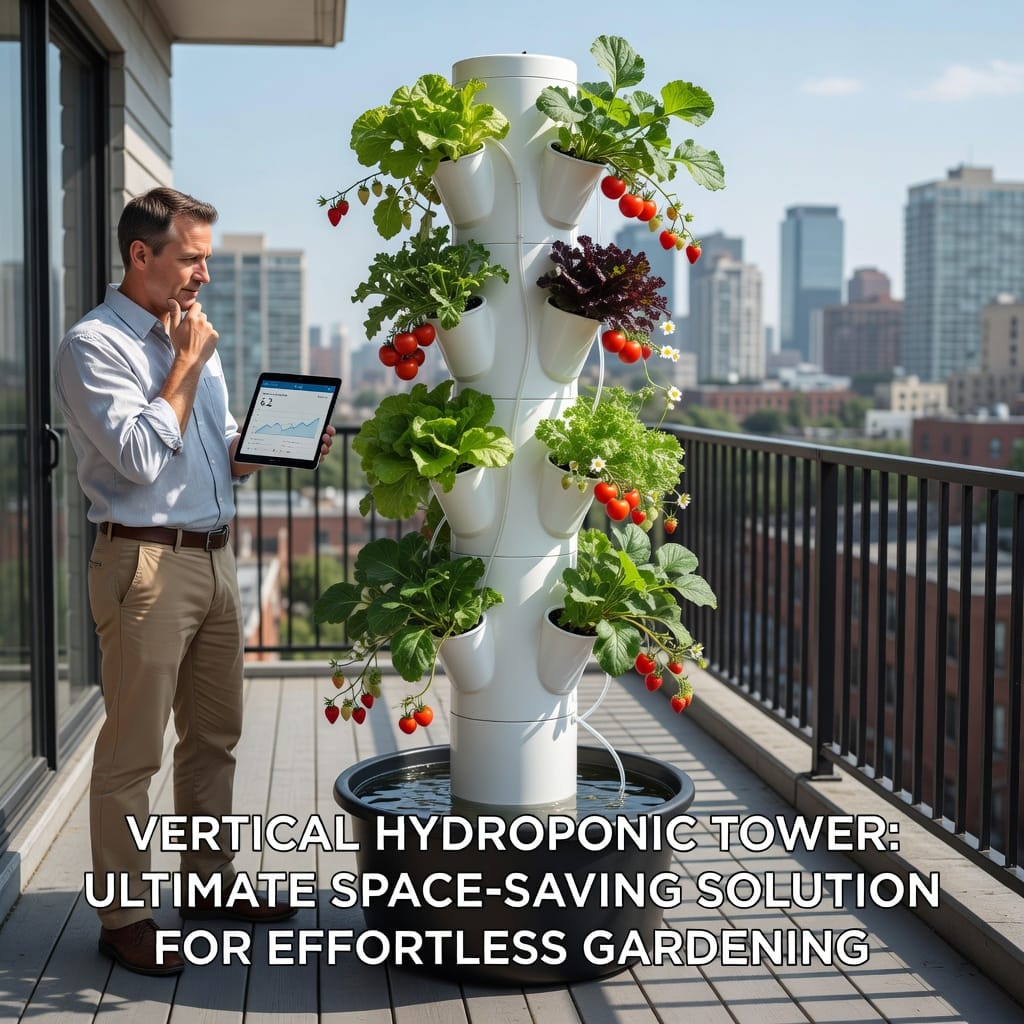
A vertical hydroponic tower is essentially a tall, stacked structure that grows plants without soil. Instead of dirt, it uses nutrient-rich water to feed the roots. The “vertical” part means plants grow upward in layers, like a high-rise for your veggies.
These towers come in various sizes, from countertop models to full backyard units. The basic design includes a central tube or stack of pots where water flows from top to bottom, delivering nutrients as it goes. Pumps and timers keep everything circulating smoothly.
Hydroponics itself is an old idea, dating back to ancient hanging gardens, but vertical towers are a modern twist. They’re designed for efficiency, especially in tight spaces. If you’re curious about the basics of hydroponic systems, check out our beginner’s guide to hydroponics for more details.
Space is at a premium these days. A vertical hydroponic tower solves that by going up instead of out. Imagine harvesting lettuce or herbs from a sleek tower in your kitchen nook—no sprawling garden beds required.
Beyond saving space, these systems use less water than traditional gardening. They recycle the nutrient solution, cutting down on waste. Plus, without soil, there’s no mess or weeds to pull. It’s gardening made simple.
For beginners, the appeal is in the low maintenance. Automated features handle watering and lighting, so you spend more time enjoying the harvest than tending the plants. And in colder climates, indoor vertical hydroponic towers let you grow fresh produce all winter.
Let’s break down the advantages. There are plenty of reasons why these towers are gaining popularity among home gardeners.
In apartments or small homes, horizontal growing just doesn’t cut it. A vertical hydroponic tower fits into corners or along walls, turning unused vertical space into a productive garden. Some models grow up to 50 plants in just a few square feet.
This setup is ideal for balconies too. No need for deep soil beds that could leak or weigh down your space. Everything stays contained and clean.
Traditional soil gardens can guzzle water, especially in dry areas. Hydroponic towers use up to 90% less water because the system recirculates it. Nutrients are delivered directly to roots, so there’s no evaporation loss.
Energy-wise, LED grow lights in many vertical hydroponic towers are efficient. They provide the right spectrum without spiking your electric bill.
Plants in a vertical hydroponic tower grow quicker—often 30-50% faster than in soil. With constant access to oxygen and nutrients, roots thrive. You could see herbs ready in weeks instead of months.
Yields are impressive too. Layered designs mean more plants per area, so you’ll harvest more from less space. Perfect for feeding a family or sharing with neighbors.
Forget seasonal limits. A vertical hydroponic tower indoors keeps things growing regardless of weather. Pair it with grow lights, and you’ve got a mini greenhouse.
This is great for fresh salads in winter. No pesticides needed since you control the environment, leading to healthier eats.
Understanding the mechanics makes setup easier. At its core, a vertical hydroponic tower relies on water and physics.
Water with dissolved nutrients starts at the top reservoir. A pump pushes it up, then it trickles down through the tower, nourishing roots in each layer. Gravity does the rest, collecting excess in a bottom basin to recircute.
Roots hang in net pots or aerated chambers, exposed to air for oxygen. This deep water culture or NFT (nutrient film technique) style ensures even distribution.
Sensors and timers automate the flow, preventing overwatering. pH and nutrient monitors help maintain balance—aim for 5.5-6.5 pH for most plants.
For a deeper look at nutrient solutions, the Old Farmer’s Almanac has some solid beginner advice.
Not all vertical hydroponic towers are the same. Consider your space, budget, and what you want to grow.
For small kitchens, opt for compact models like the LetPot 6-Tier Hydroponic Garden Tower. It’s user-friendly with a built-in pump and holds about 18 plants. You can find it here on Amazon.
If you’re serious about yields, a larger option like the Active Grow 36-Pot Vertical Hydroponic Tower works well. It stacks high and supports veggies like tomatoes. Check it out on Amazon.
Budget-friendly? The Mr. Hydro Vertical Tower Kit is a solid starter. It’s modular and expandable, great for beginners. Available on Amazon.
Think about materials too—PVC is common for durability, while some use food-grade plastics to avoid leaching.
Power needs vary. Battery backups are handy for outages, ensuring your vertical hydroponic tower stays running.
Getting started doesn’t have to be overwhelming. Follow these steps for a smooth launch.
First, pick a spot with good light or near an outlet for LEDs. Ensure it’s stable—towers can get top-heavy with plants.
Assemble the tower per instructions. Most snap together or use simple connectors. Place net pots in each slot.
Mix your nutrient solution. Start with a balanced hydroponic fertilizer, following package ratios. Fill the reservoir and prime the pump.
Add seedlings or clones. Popular starters include lettuce, basil, and spinach—they root fast in water.
Turn on the system. Run it for 15-30 minutes per hour initially, adjusting based on plant needs.
Monitor daily. Check water levels, pH, and for any clogs. Clean the tower every few weeks to prevent buildup.
Troubleshooting tip: If leaves yellow, it might be nutrient imbalance. Test and adjust accordingly.
What grows well in a vertical hydroponic tower? Leafy greens top the list.
Lettuce varieties like romaine or butterhead thrive. They’re quick, harvesting in 4-6 weeks.
Herbs such as basil, mint, and cilantro love the constant moisture. They’ll bush out beautifully in upper layers.
For fruits, cherry tomatoes or strawberries work if you have a taller tower. They need support but yield tasty results.
Avoid root veggies like carrots—they’re not suited for hydro. Stick to above-ground plants for best success.
Seasonal swaps keep it fun. Try kale in cooler months or peppers in summer.
Once running, a vertical hydroponic tower needs regular care to stay productive.
Change the nutrient solution every 1-2 weeks. Fresh mixes prevent deficiencies.
Clean filters and pumps monthly. Algae can build up, so wipe surfaces and use opaque reservoirs.
Prune regularly. Remove dead leaves to encourage growth and prevent disease.
Pest control is minimal indoors, but watch for aphids. Neem oil sprays work gently.
Track growth with a journal. Note what works for your specific vertical hydroponic tower setup.
If you’re expanding, learn more about scaling up in our advanced hydroponic guides.
Why switch to a vertical hydroponic tower over dirt-based methods?
Soil gardens require tilling, weeding, and watering by hand—time-consuming. Hydro towers automate most of that.
Pests and diseases spread easier in soil. Controlled hydro environments reduce risks.
Water use is a big win. Traditional plots lose moisture to evaporation; towers reuse nearly all of it.
Setup costs more upfront for a vertical hydroponic tower—$100-500 depending on size. But long-term savings on water and no soil amendments add up.
For city folks, hydro wins on space and cleanliness. No muddy boots or bug battles.
People everywhere are loving their vertical hydroponic towers. Take Sarah, a city apartment dweller. She started with a small unit and now grows enough salad greens for her family weekly. “It’s like magic,” she says.
Urban farms use larger versions to feed communities. In schools, kids learn STEM through hands-on hydro projects.
One farmer in California scaled a vertical hydroponic tower farm to supply local markets. Yields tripled without extra land.
These stories show it’s accessible for all levels. Start small, and you’ll see results.
Every system has hurdles. Power failures can dry out roots—use timers with backups.
Nutrient burn from overfeeding shows as crispy tips. Dilute and flush the system.
Algae growth? Keep light out and clean often.
For taller towers, stability matters. Secure to walls if needed.
Temperature swings affect growth. Aim for 65-75°F daytime.
With tweaks, your vertical hydroponic tower will hum along smoothly.
Ready to grow bigger? Add multiple towers for variety.
Integrate smart tech like app-controlled pumps for remote monitoring.
Connect to aquaponics by adding fish—waste feeds plants naturally.
Outdoor setups in mild climates extend seasons. Shade cloth helps in hot areas.
Share tips in online communities for inspiration.
As tech advances, vertical hydroponic towers get smarter. AI monitors optimize nutrients in real-time.
Sustainability drives growth. These systems reduce food miles, cutting carbon footprints.
Affordable kits make it easier for everyone. Soon, every home could have one.
Whether for health, hobby, or eco-reasons, a vertical hydroponic tower opens doors to effortless gardening.
Imagine plucking fresh basil for dinner, all from your own space-saving setup. It’s rewarding and simple. Give it a try—you might just get hooked on growing your own.