
As an Amazon Associate I earn a small commission from qualifying purchases made using links from this website.
If you’re dipping your toes into hydroponic gardening, you’re in for a treat. Hydroponic towers offer a smart way to grow fresh produce vertically, saving space and water while delivering bumper crops. But not all plants thrive in this setup. The best plants for hydroponic towers are those that love nutrient-rich water, quick growth cycles, and minimal fuss.
In this post, we’ll dive into the top four varieties that make hydroponic tower gardening a breeze. These picks are beginner-friendly, high-yield, and perfect for stacking up in a tower system. Whether you’re growing on a balcony or in a sunny corner of your kitchen, these plants will help you harvest greens and herbs without the dirt.
We’ll cover why each one shines in hydroponics, how to set them up in your tower, and tips for success. By the end, you’ll feel confident picking the best plants for hydroponic towers to suit your setup.
Hydroponic towers are like vertical farms for home use. They circulate nutrient solutions through stacked pods, letting roots dangle in water instead of soil. This method speeds up growth by up to 30-50% compared to traditional gardening.
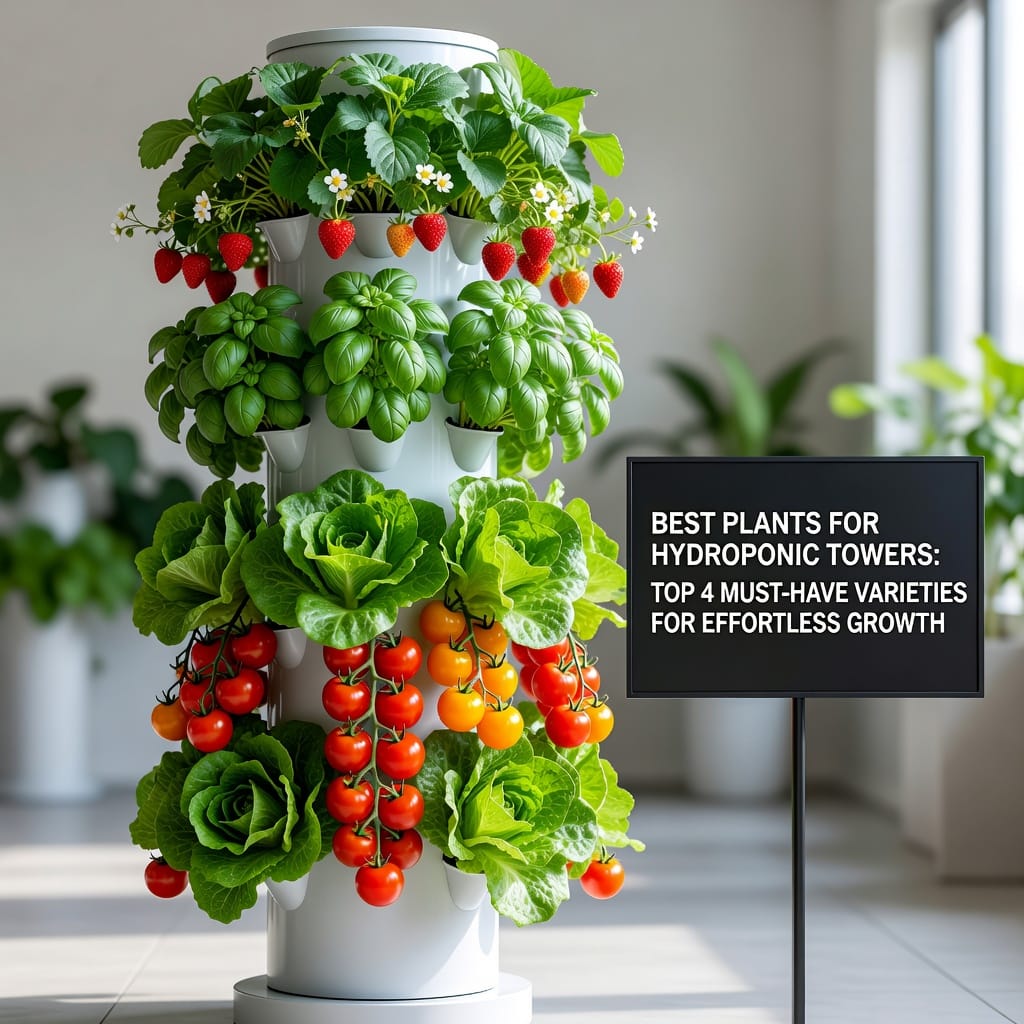
Space is king in urban living, and towers maximize every inch. You can grow pounds of produce in a footprint smaller than a card table. Plus, they use 90% less water than soil-based gardens, making them eco-friendly.
The best plants for hydroponic towers share a few traits: shallow roots, fast maturation, and tolerance for consistent moisture. Leafy greens and herbs top the list because they don’t need deep soil and flourish in controlled environments.
If you’re new to this, check out our beginner guide to hydroponics for setup basics. It’s packed with steps to get your tower running smoothly.
Before we jump into the plants, let’s talk nutrients. A good hydroponic nutrient mix is essential. I recommend starting with something like the General Hydroponics Flora Series, which balances growth boosters for veggies and herbs.
Lettuce is often the first choice for anyone exploring the best plants for hydroponic towers. It’s forgiving, grows fast, and provides that crisp harvest you’ve been craving.
In a hydroponic tower, lettuce develops tender leaves without bolting in the heat. Varieties like romaine, butterhead, or loose-leaf mature in just 4-6 weeks. The vertical setup keeps air circulating, reducing mold risks that plague soil gardens.
Lettuce roots are shallow, fitting perfectly into tower pods. It absorbs nutrients efficiently, leading to vibrant greens packed with vitamins. Home growers love how it doesn’t demand much light—about 12-16 hours a day works fine.
One study from the University of Arizona shows hydroponic lettuce yields up to three times more per square foot than field-grown. That’s a win for tower enthusiasts.
Start with seedlings or seeds in net pots filled with clay pebbles. Place them in the lower to mid-level pods where light is even. Maintain water temperature around 65-70°F for optimal uptake.
pH levels between 5.5 and 6.5 keep things balanced. Use a simple pump to circulate the solution every few hours. If your tower has LED lights, set them to a cool spectrum for leafy growth.
For variety, try bibb lettuce—it’s buttery and thrives in compact spaces. Harvest outer leaves as they grow, extending your yield.
Watch for nutrient deficiencies; yellow tips mean more nitrogen. A pH meter helps here—affordable ones are a game-changer.
Pests are rare in hydroponics, but aphids can sneak in. Neem oil spray does the trick without harming roots.
In my experience, rotating varieties keeps things fresh. One tower might have red leaf up top and green oak down below. The best plants for hydroponic towers like lettuce make experimenting fun.
If you’re scaling up, pair it with companion herbs. More on that later.
Basil brings flavor and fragrance to any hydroponic setup. As one of the best plants for hydroponic towers, it’s a staple for pesto lovers and salad makers alike.
This herb’s bushy growth suits towers perfectly. It needs good airflow, which vertical systems provide naturally. Genovese or sweet basil varieties bush out, filling pods without crowding neighbors.
Growth is rapid—pinch tops at 6 inches to encourage branching. In hydroponics, basil yields continuously for months, unlike soil plants that tire out.
It’s nutrient-hungry but rewards you with essential oils that boost health. Italian studies highlight its antioxidant punch, making home-grown basil a smart pick.
Towers let you harvest leaves weekly, keeping your kitchen stocked. Plus, the scent? It’s like having an Italian garden indoors.
Sow seeds directly into rockwool cubes, then transfer to tower slots. Mid to upper pods get more sun, ideal for basil’s love of 14-16 hours of light.
Keep EC levels at 1.5-2.5 for strong stems. Warm water around 70-75°F mimics Mediterranean vibes basil craves.
Prune regularly to prevent legginess. Flowers signal it’s time to harvest more aggressively—blooming basil turns bitter.
For a twist, try Thai basil for Asian dishes. It adapts well and adds color to your tower.
Overwatering isn’t an issue in hydroponics, but monitor oxygen levels. Air stones in your reservoir prevent root rot.
If leaves curl, check for low humidity—aim for 50-70%. A small humidifier nearby helps in dry climates.
Basil pairs beautifully with tomatoes in companion planting, but in towers, keep it solo for best results. Among the best plants for hydroponic towers, basil’s versatility shines in small spaces.
Grab quality seeds from this pack on Amazon to start your herb adventure.
Spinach is a powerhouse for nutrition and ease, earning its spot among the best plants for hydroponic towers. Those iron-rich leaves grow vigorously without soil hassles.
This cool-season green prefers the stable temps of hydroponics, avoiding bolting from heat spikes. Baby spinach varieties like Bloomsdale mature in 30-40 days, perfect for quick turns.
Towers support spinach’s vining habit, with tendrils climbing if needed. It thrives in partial shade, so lower pods work great.
Hydroponic spinach has fewer oxalates than soil-grown, per research from the Journal of Food Science. Fresher taste, better for you—what’s not to love?
Yields are impressive: one tower can produce enough for salads all season.
Use starter plugs with seeds, spacing them 4-6 inches in pods. Full-spectrum lights for 10-12 hours daily mimic spring conditions.
Nutrient solution at pH 6.0-7.0 and EC 1.2-1.8 fuels those broad leaves. Chiller the water to 60-65°F for tender growth.
Harvest from the outside in, like lettuce, for ongoing picks.
Savoy spinach adds texture—wrinkled leaves hold dressings well.
Yellowing? Boost potassium. A balanced fertilizer like FoxFarm’s hydroponic trio covers bases.
Slugs aren’t a worry, but watch for powdery mildew. Good spacing in towers prevents it.
Spinach complements strawberries in mixed towers—more on berries next. The best plants for hydroponic towers build a balanced ecosystem.
Incorporate spinach into smoothies or sautés. Growing your own makes healthy eating effortless.
Strawberries cap our list of the best plants for hydroponic towers. Their juicy berries dangle delightfully from pods, turning your setup into a mini orchard.
These perennials fruit year-round in controlled towers, unlike seasonal soil plants. Everbearing types like Seascape produce from spring to fall.
Hydroponics cuts disease risks—no soil-borne fungi. Roots in aerated water lead to sweeter, bigger berries.
A report from the USDA notes hydroponic strawberries use 70% less land. Vertical towers amplify that efficiency.
The visual appeal? Ripe reds peeking from green foliage is pure joy.
Start with runners or bare-root plants in coco coir-filled nets. Upper pods catch more light, crucial for flowering—16-18 hours initially.
pH 5.5-6.2 and EC 1.0-1.5 suit berries. Warm reservoir at 65-75°F encourages runners.
Pollinate by hand with a soft brush if indoors. Remove old leaves to focus energy on fruit.
Alpine varieties save space and pack flavor.
Pick when fully red for peak sweetness. One plant yields 1-2 quarts seasonally.
Nutrient tweaks: more phosphorus during bloom. If fruits split, ease back on water flow.
Pests like spider mites? Introduce ladybugs or use insecticidal soap.
Strawberries elevate towers from greens to gourmet. Pair with basil for a strawberry-basil salad.
For starters, try these Everbearing Strawberry Plants on Amazon.
Success with the best plants for hydroponic towers boils down to consistency. Monitor pH and EC daily—tools are inexpensive.
Clean your system monthly to prevent algae. Use reverse osmosis water if tap is hard.
Lighting matters: full-spectrum LEDs for 12-16 hours, depending on the plant.
Temperature swings? Aim for 65-80°F daytime. Fans help circulation.
Troubleshooting common issues: Wilting often means low oxygen—add airstones. Slow growth? Check light distance.
Scaling up? Rotate crops to keep soil… wait, nutrient solutions fresh.
For deeper dives, the National Aeronautics and Space Administration’s hydroponics page explains tech roots—fascinating for space gardeners.
Don’t stop at one variety. Combine lettuce at the base, basil mid-way, spinach shaded spots, and strawberries up top.
This layering optimizes light and nutrients. The best plants for hydroponic towers complement each other, deterring pests naturally.
Track your setup with a journal—pH logs, harvest dates. It reveals patterns over time.
Community forums buzz with tips, but hands-on beats all.
Growing the best plants for hydroponic towers opens doors to fresh, homegrown eats without the backyard grind. Lettuce, basil, spinach, and strawberries deliver effortless wins, from salads to desserts.
Start small, tweak as you go, and watch your tower thrive. It’s rewarding, sustainable, and downright delicious. What’s your first pick? Dive in and enjoy the harvest.