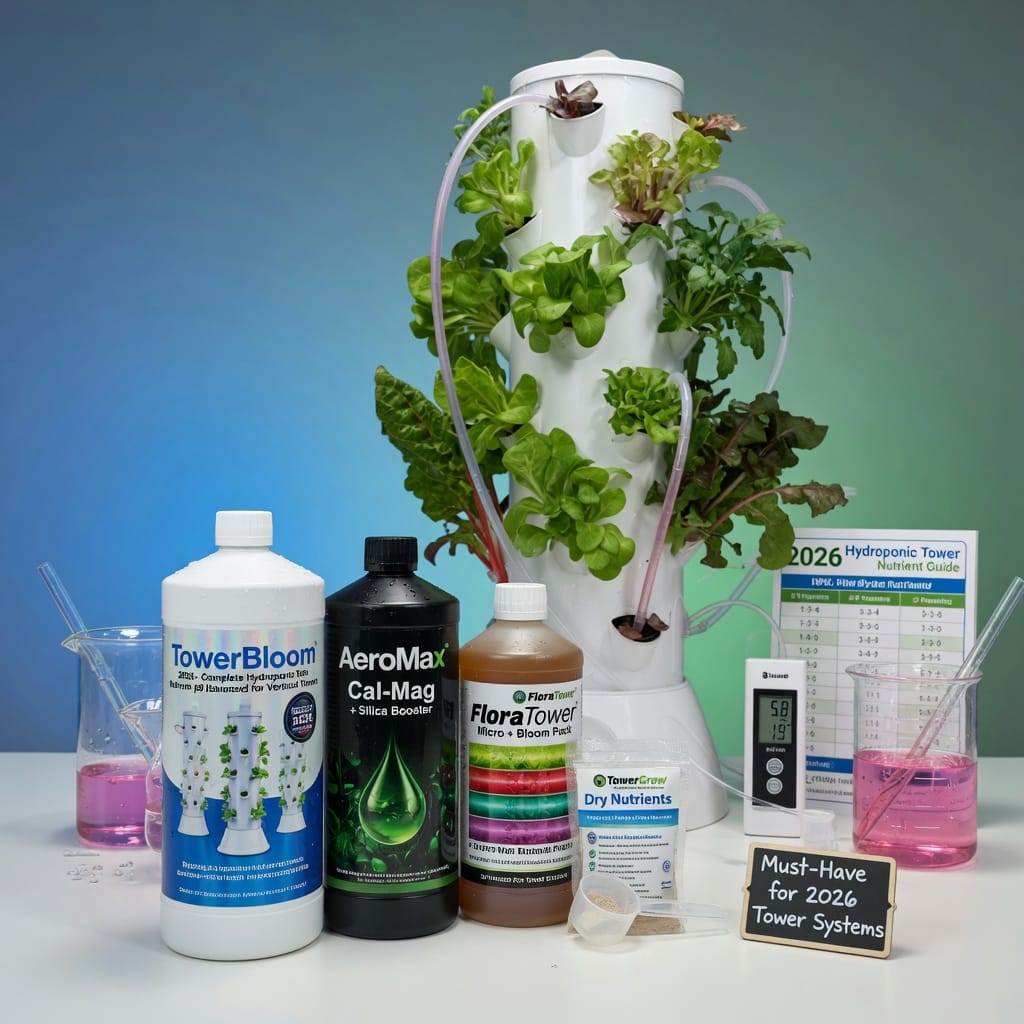
Best Hydroponic Nutrients and Fertilizers for Tower Systems in 2026
Vertical hydroponic towers have grown popular because they let gardeners grow more food in smaller spaces. The right nutrients make all the difference in how well plants perform in these systems. Choosing the best hydroponic nutrients and fertilizers for tower systems in 2026 means focusing on balanced formulas that support fast growth, strong roots, and healthy yields without clogging pumps or leaving residue.
Tower setups run water and nutrients through a closed loop, so the mix needs to stay stable and dissolve completely. Poor choices lead to weak plants or equipment issues. In the coming year, growers are paying closer attention to formulas that work well with LED lighting and automated monitoring.
What Makes Nutrients Work Well in Towers
Hydroponic nutrients supply the essential elements plants normally pull from soil. In a tower, every drop counts because the root zone stays constantly moist. Look for products labeled for hydroponics that include macro elements like nitrogen, phosphorus, and potassium plus trace minerals such as iron, magnesium, and calcium.
Three-part systems remain popular because they let you adjust ratios as plants move from leafy growth to flowering or fruiting stages. Single-part options have improved too, offering convenience for busy users who want simpler mixing.
pH stability matters more than ever. Towers often sit in warmer rooms or greenhouses, which can shift pH quickly. Formulas that buffer themselves help keep levels between 5.5 and 6.5 without constant tweaking.
Top Nutrient Picks for 2026
General Hydroponics Flora Series continues to earn trust for its reliable results across many plant types. The three bottles let you fine-tune nitrogen during early growth and boost phosphorus later. Many tower owners report steady performance with lettuce, herbs, and strawberries when they follow the recommended schedule.
Another strong option comes from Advanced Nutrients pH Perfect line. These formulas automatically adjust pH, which saves time and reduces stress on the system. They also include extra chelates that keep iron and other metals available even when water quality varies.
For growers wanting a more straightforward approach, Masterblend 4-18-38 combined with calcium nitrate and Epsom salt gives excellent value. This classic trio dissolves cleanly and supports heavy fruiting crops in vertical setups. Many small commercial towers use it successfully year after year.
Organic options are gaining ground too. Products like FoxFarm Grow Big and Tiger Bloom provide natural ingredients that still perform in recirculating systems. They tend to need more frequent changes but appeal to those avoiding synthetic salts.
How to Mix and Monitor Nutrients
Start with clean, filtered water at room temperature. Always add nutrients in the order listed on the label, stirring well between each step. Check electrical conductivity (EC) or total dissolved solids (TDS) daily when first learning your system. Most herbs do well around 800-1200 ppm, while fruiting plants can handle higher levels. The Apera Multi-Parameter test kit makes monitoring these a breeze.
Change the full nutrient solution every one to two weeks in a tower. This prevents salt buildup that can harm roots. Between changes, top off with plain water and a light nutrient boost to keep the strength steady.
For more details on matching nutrients to different tower models, see our post on vertical hydroponic tower systems.
Common Mistakes to Avoid
Many new growers overuse nutrients thinking stronger equals faster growth. This often leads to nutrient burn or clogged lines. Start at half strength and work up while watching the plants. Yellowing leaves or brown tips usually signal the need to adjust concentration or flush the system.
Another issue is ignoring water temperature. Warm nutrient solution holds less oxygen and can encourage algae. Keep reservoir water between 65 and 72 degrees Fahrenheit for best results.
Looking Ahead in 2026
Formulas continue to improve with better chelation and added beneficial microbes. Some new products include silicon for stronger stems and natural plant extracts that support root health. Pairing these with good lighting and airflow creates reliable results in tower gardens.
University research from places like Penn State Extension continues to guide best practices for nutrient management in soilless systems. Staying informed helps you pick products that truly match your setup and goals.
With the right choices and consistent care, your tower system can deliver fresh produce all year. Experiment a little with ratios and watch how your plants respond. Small tweaks often lead to big improvements in taste and harvest size.