
If you’re dipping your toes into urban gardening or just want to grow fresh greens year-round without the hassle of soil, growing lettuce in hydroponic towers might be your next big adventure. These vertical systems stack plants upward, saving space and making it easy to harvest crisp leaves right from your kitchen or balcony. I’ve seen firsthand how this method turns even small apartments into productive green spaces. In this post, we’ll dive into 10 simple tips to help you succeed, whether you’re a beginner or looking to tweak your setup for better yields.
Hydroponic towers use nutrient-rich water instead of dirt, circulating it through the roots for faster growth. Lettuce thrives here because it’s a cool-season crop that loves consistent moisture and doesn’t need much light. Expect harvests in just 4-6 weeks, compared to months in traditional gardens. But like any setup, a few smart tweaks can make all the difference. Let’s break it down step by step.
Before we jump into the tips, it’s worth understanding the appeal. Growing lettuce in hydroponic towers isn’t just trendy—it’s practical. These systems minimize pests, reduce water use by up to 90%, and let you control every variable. No more worrying about weeds or soggy soil.
In cities where space is tight, a tower can produce enough lettuce for salads all season. Plus, it’s eco-friendly, cutting down on food miles. If you’re new to this, check out our beginner’s guide to hydroponics for the basics on setting up your first system.
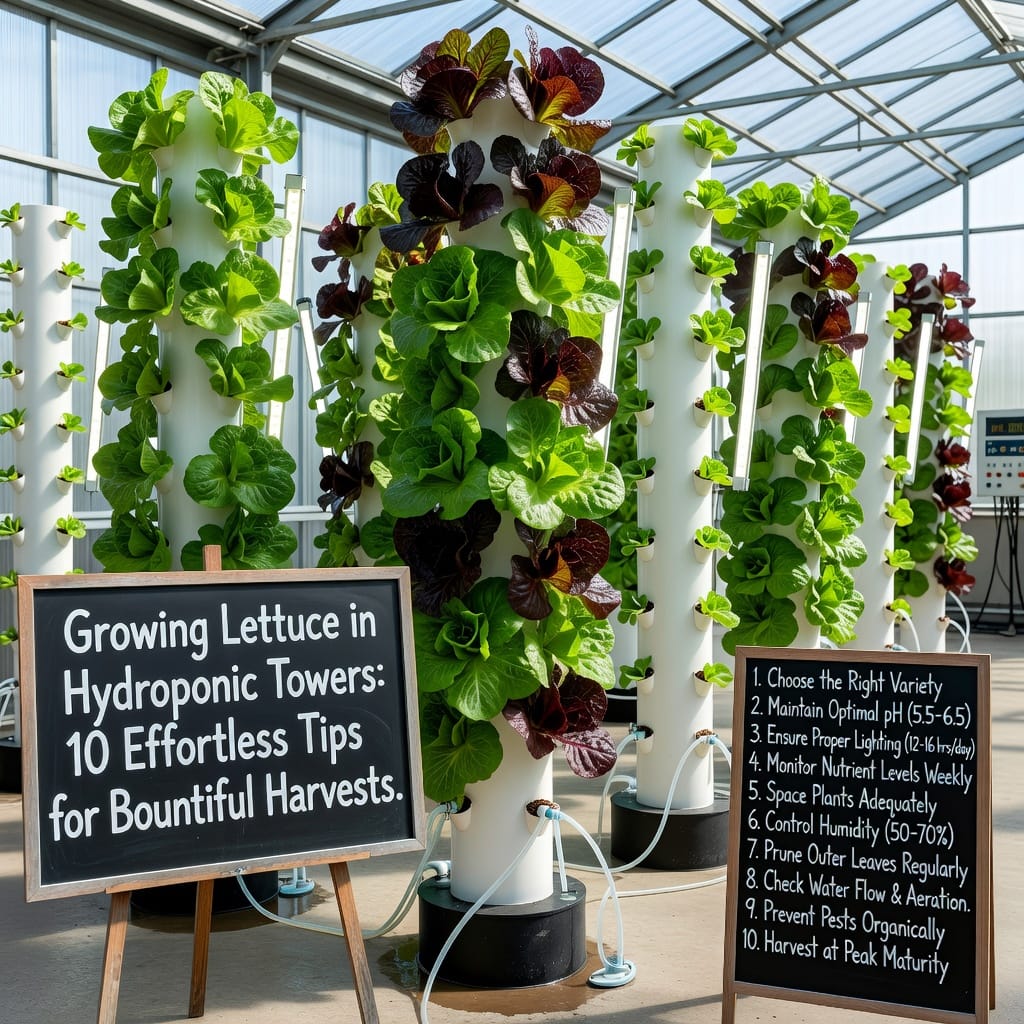
For more science-backed info on lettuce varieties, the University of California’s Agriculture and Natural Resources site offers great resources on what grows best in controlled environments.
Not all lettuce is created equal when growing in hydroponic towers. Start with loose-leaf types like Bibb, Buttercrunch, or Red Sails. These grow compactly and mature quickly, perfect for vertical spaces.
Why these? They have shallow roots that fit tower nets well, and their tender leaves don’t bolt (go to seed) as fast in warm water temps. Avoid head lettuces like iceberg—they take longer and need more room.
When shopping for seeds, look for hydroponic-specific packs. For a reliable starter kit, this Burpee Looseleaf Lettuce Seeds assortment gives you variety without overwhelming your tower.
Sow seeds in rockwool cubes or directly into the tower’s media. Germination takes 7-10 days at 70°F. Thin seedlings to one per pocket for even growth.
Light is the engine for growing lettuce in hydroponic towers. These greens need 12-16 hours of bright, indirect light daily. In indoor setups, LED grow lights are a game-changer.
Position lights 12-18 inches above the top of the tower to avoid scorching leaves. Full-spectrum bulbs mimic sunlight best, promoting photosynthesis without excess heat.
If your space gets natural sun, supplement on cloudy days. A timer keeps things consistent—lettuce hates irregular light cycles.
For an affordable upgrade, consider this Spider Farmer LED Grow Light—it’s energy-efficient and covers a standard tower nicely.
Monitor for leggy plants; if stems stretch, bump up light intensity. Healthy leaves should be vibrant green, not pale.
Water quality is crucial in hydroponics. For growing lettuce in hydroponic towers, aim for 65-70°F. Too warm, and roots suffocate; too cold, growth slows.
Use a chiller if your room heats up, or insulate the reservoir. pH should hover between 5.5 and 6.5—lettuce is picky about acidity.
Test weekly with strips or a digital meter. Adjust with pH up/down solutions as needed. Stable levels prevent nutrient lockout, where plants can’t absorb essentials.
A simple Aqua Master pH and TDS Meter makes monitoring effortless and accurate.
Change the nutrient solution every two weeks to keep things fresh. This tip alone can double your harvest speed.
Lettuce craves nitrogen for those lush leaves, but balance is key in hydroponic towers. Use a premixed hydroponic fertilizer with an NPK ratio like 5-1-5.
Start at half strength for seedlings to avoid burn. As plants mature, ramp up to full. Watch for yellowing leaves— that’s a nitrogen dip signal.
Micronutrients like calcium prevent tip burn, a common lettuce woe. Organic options work too, but liquid formulas mix easily.
This General Hydroponics Flora Series trio covers all bases and is trusted by pros for consistent results.
Feed continuously via the tower’s pump. Over time, you’ll notice thicker, juicier heads.
Overcrowding kills vibes in growing lettuce in hydroponic towers. Each pocket should hold one plant, spaced 6-8 inches apart vertically.
This airflow prevents mold and lets light reach lower leaves. In a 5-foot tower, you can fit 20-30 heads easily.
Start seeds in trays, then transplant at 2-3 weeks. Handle roots gently to minimize shock.
If your tower has adjustable slots, use them for varied heights. Smaller varieties at the bottom, taller at top.
Proper spacing means less pruning and more harvest. It’s like giving your plants personal space to thrive.
Lettuce prefers cool conditions: 60-70°F daytime, 50-60°F night. In hydroponic towers, heat from pumps can rise temps, so ventilate well.
Use fans for gentle airflow, mimicking a breeze. Humidity around 50-70% keeps leaves perky without dampness issues.
In dry climates, a humidifier helps; in humid ones, dehumidify. Thermometers in multiple spots ensure evenness.
Sudden changes stress plants—gradual is best. This setup yields crisp, non-bitter greens every time.
Pests love hydroponics too, but towers make spotting them easier. Aphids and fungus gnats are common culprits for lettuce.
Inspect weekly under leaves. Neem oil or insecticidal soap works gently—apply at dusk.
Clean your system monthly to prevent slime buildup, a disease hotbed. Use beneficial bacteria additives for natural defense.
In growing lettuce in hydroponic towers, prevention beats cure. Quarantine new plants and maintain hygiene.
If issues arise, isolate affected sections. Healthy towers bounce back fast.
Don’t wait for full maturity—cut outer leaves when they’re 4-6 inches tall. This “cut-and-come-again” method extends harvests up to 8 weeks.
Use clean shears to avoid bruising. Morning harvests are best, when leaves are hydrated.
In towers, rotate harvesting from bottom up to balance weight. This keeps the system stable.
For variety, mix baby greens with mature ones. You’ll get fresh salads without replanting often.
Success here means planning meals around your tower’s output—endless crunch!
Regular pruning keeps growing lettuce in hydroponic towers compact. Snip yellowing or overcrowded leaves to direct energy to new growth.
Train vines if using climbing varieties, though most lettuce stays bushy. Tie gently with soft ties.
Good airflow reduces humidity pockets, cutting disease risk. Prune every 10 days lightly.
This maintenance takes minutes but pays off in denser, healthier crops. Your tower will look lush and productive.
Once basics click, automate for ease. Timers for lights and pumps, plus app-controlled sensors for pH and nutrients.
Smart systems alert you to issues via phone—perfect for busy folks growing lettuce in hydroponic towers.
Start small, then add CO2 enrichment for boosts in sealed spaces. Track growth in a journal to refine.
Communities online share tweaks; join forums for inspiration. With these, your harvests will bountifully overflow.
Wrapping up, growing lettuce in hydroponic towers opens doors to fresh, homegrown eats with minimal fuss. Experiment with these tips, adjust to your setup, and watch your greens flourish. It’s rewarding, sustainable, and downright delicious. Ready to stack your first tower? The greens are waiting.