Hydroponic Tower Cost Breakdown: Is It Worth It? (Setup, Running Costs, ROI)
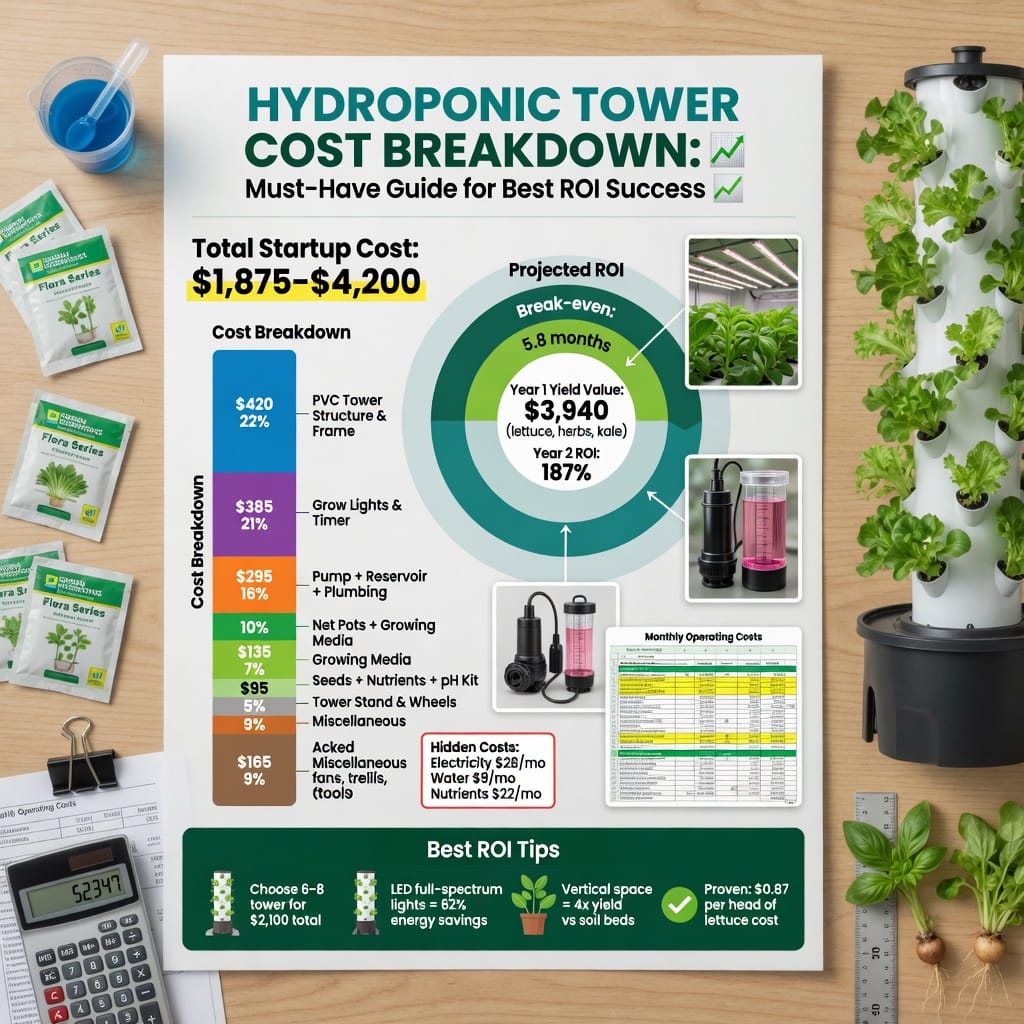
Hydroponic towers let you grow fresh produce in small spaces without soil. Many people wonder if the upfront expense pays off over time. A clear hydroponic tower cost breakdown helps you see the real numbers behind setup, ongoing expenses, and potential returns.
What Goes Into a Typical Hydroponic Tower Setup
Most systems start with the tower itself. Basic vertical units range from $150 for smaller models to $600 for larger ones with pumps and reservoirs included. You can find reliable starter kits that match different budgets and space needs.
Add-ons like grow lights often push the total higher if you plan to grow indoors year-round. A quality full-spectrum LED light suitable for hydroponics runs about $80 to $200. Nutrients, pH testers, and growing medium round out the first purchase and usually add another $50 to $100.
For a complete beginner setup, expect to spend between $300 and $900 before planting your first seeds.
Breaking Down Running Costs Each Month
Once the tower is running, monthly expenses stay fairly low. Electricity for the pump and lights averages $10 to $25 depending on your local rates and how many hours the lights stay on.
Nutrient refills and pH adjusters cost roughly $8 to $15 per month if you grow consistently. Water usage stays minimal compared with soil gardening because the system recirculates most of it.
Cleaning supplies and occasional replacement parts, such as pump impellers or tubing, add another $5 on average. Altogether, most users report $25 to $50 in ongoing monthly costs once the system is established.
Comparing Costs to Traditional Gardening
Soil gardening often hides expenses like tools, soil amendments, and pest control that add up quickly. Hydroponic towers reduce some of those line items while requiring more attention to water chemistry.
If you already buy produce at the grocery store, the savings become clearer. A single tower can produce several heads of lettuce or bunches of herbs each month. At current retail prices, that output quickly offsets the monthly running costs.
One helpful resource for learning basic maintenance is this guide on vertical hydroponic tower systems at https://verticalhydrotower.com/vertical-hydroponic-tower/.
Real-World ROI Timeline
Most users reach break-even within 12 to 18 months when growing high-value crops like leafy greens and herbs. Faster returns appear if you sell extras at local markets or avoid buying those items at the store.
Yield matters more than size. A well-managed tower can produce the equivalent of $30 to $60 worth of produce monthly once plants are established. Subtract the $25 to $50 running costs and you net $5 to $35 each month after the initial investment is paid off.
Smart Purchases That Protect Your Investment
Choosing quality components from the start reduces replacement costs later. These three popular options on Amazon have strong reviews for durability:
– This vertical hydroponic tower system works well for beginners looking for an all-in-one kit.
– The AeroGarden Harvest model provides a compact way to test indoor growing before moving to a full tower.
– The Lettuce Grow Farmstand offers a larger footprint for families wanting higher volume.
Each link leads to a current product page with updated pricing and customer feedback.
Tips to Improve Your Return on Investment
Track your actual yields for the first three months. Adjust light schedules and nutrient strength based on what you observe. Many growers increase output by 20 percent simply by fine-tuning these two variables.
Start with fast-growing crops like basil, kale, and lettuce. These mature in four to six weeks, letting you harvest sooner and reinvest savings into upgrades such as better timers or extra reservoirs.
Consider adding a small fan for airflow. It costs under $20 but helps prevent mold and improves plant health, which directly affects how much you harvest.
Is a Hydroponic Tower Worth the Money?
The answer depends on how much you value fresh produce, limited outdoor space, and consistent harvests. When you look at the full hydroponic tower cost breakdown—including setup, monthly expenses, and realistic yields—most home growers find the numbers work in their favor after the first year.
Focus on matching the system size to your actual needs and growing habits. That single choice often determines whether the tower becomes a money-saver or an expensive hobby.