Hydroponic Tower Setup for Beginners: Complete Starter Guide 2026
Getting started with a hydroponic tower can feel overwhelming at first, but once you break it down the process is straightforward and rewarding. Many new growers succeed by focusing on a few key steps rather than trying to master everything at once. This guide walks through exactly what you need for a successful hydroponic tower setup for beginners.
Why Choose a Hydroponic Tower in 2026
Vertical systems save space while letting you grow herbs, leafy greens, and even strawberries in small areas. They also use up to 90 percent less water than soil gardening, which appeals to anyone watching their utility bills. If you live in an apartment or have limited yard space, a tower brings fresh produce within reach year-round.
People also like the cleaner look compared with sprawling horizontal beds. Modern units blend into patios and balconies without looking like science experiments.
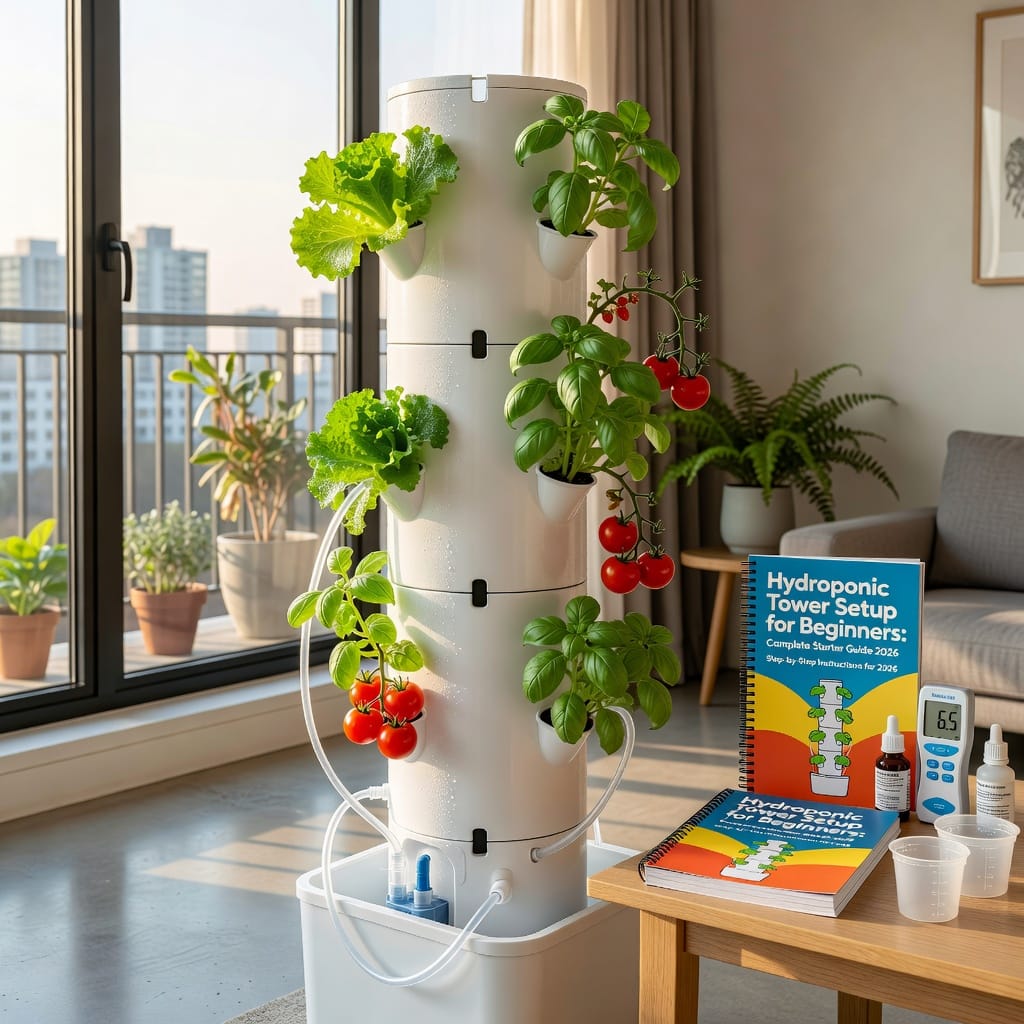
Picking the Right Tower for Your Space
Not every system works the same. Some come as basic stackable planters while others include pumps, lights, and app controls. Look for these features when you shop:
- Enough growing sites for your target crops
- Easy access to the reservoir for refilling and cleaning
- A pump that runs quietly if the unit sits near living areas
- Durable materials that resist cracking from UV light
Check current listings on Amazon for proven options like the Mr. Stacky 5 Tier Stackable Planter, the Letpot Hydroponic Growing System, or the VIVOSUN Vertical Hydroponic Tower Garden. These kits give beginners a reliable starting point without requiring separate part hunting.
Setting Up Your System Step by Step
Start by choosing a level surface near a power outlet. Assemble the tower sections according to the manual, making sure each level sits flush so nutrient solution flows evenly.
Fill the reservoir with water and add the recommended nutrients. Run the pump for a few minutes to check for leaks before planting. Once everything circulates smoothly, you can add seedlings or starter plugs.
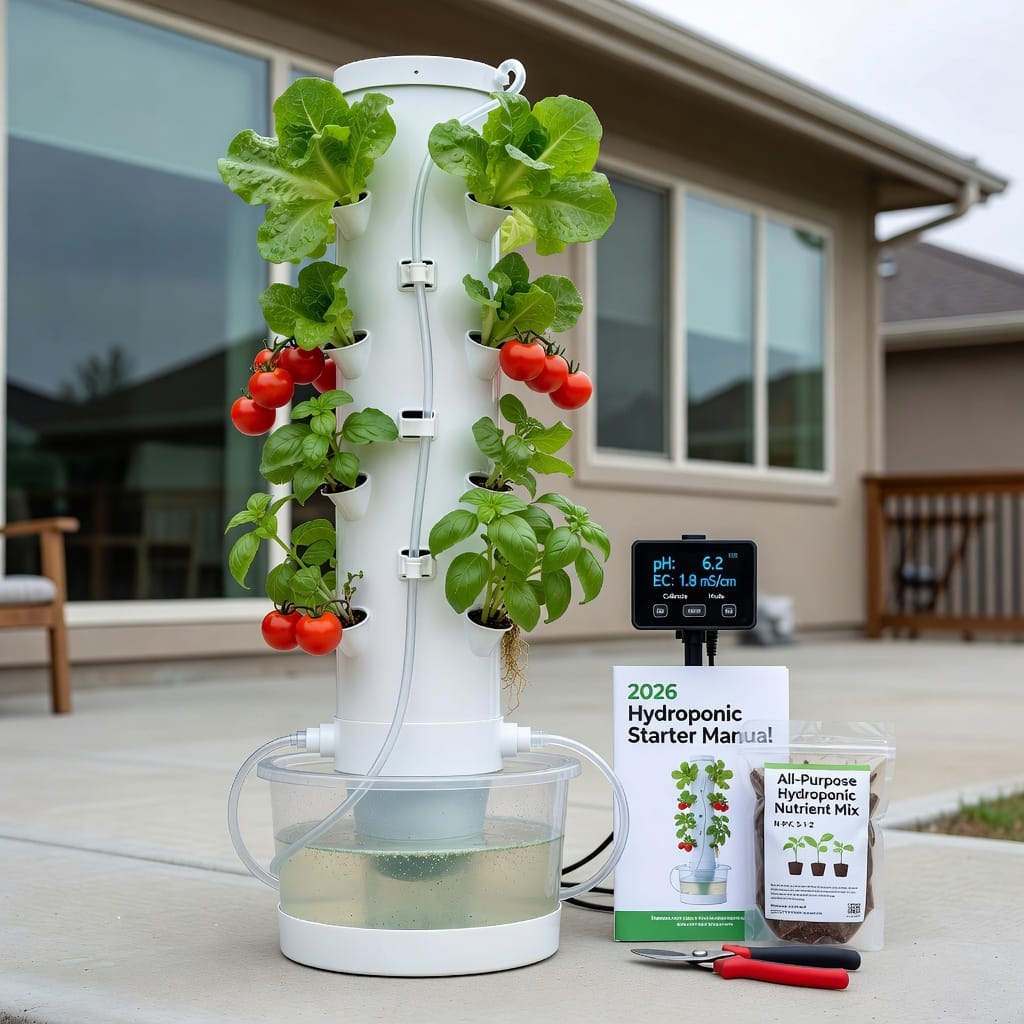
Place the tower where it receives at least six hours of direct sun or supplement with full-spectrum grow lights. Many beginners keep lights on a timer set for 14–16 hours daily.
Choosing Plants That Thrive in Towers
Leafy greens like lettuce, kale, and arugula adapt quickly. Basil, mint, and cilantro also perform well in vertical setups. Avoid plants with large root systems such as tomatoes or squash until you gain more experience.
Start with four to six different varieties so you can learn which ones grow fastest in your conditions. Rotate harvests by planting new seedlings every two weeks for a steady supply.
Daily and Weekly Maintenance
Check the water level each morning. Top off as needed and change the full nutrient solution every seven to ten days. Wipe any algae that forms on reservoir walls.
Inspect roots weekly for signs of rot or blockage. Healthy roots look white or light tan. If you spot brown or slimy sections, trim them and refresh the water immediately.
For deeper troubleshooting ideas, many growers reference resources shared on the Vertical Hydro Tower site.
Common Beginner Mistakes to Avoid
Overfeeding is the fastest way to harm plants. Follow the nutrient chart that comes with your system rather than guessing. Temperature also matters—keep the reservoir between 65°F and 75°F for best results.
Poor airflow around the tower can invite mold. Position a small fan nearby if your space feels stagnant.
Tracking Progress and Scaling Up
Keep a simple notebook or phone note of planting dates, nutrient changes, and harvest weights. After two or three cycles you will see clear patterns and can adjust timing or varieties.
Once you feel comfortable, adding a second tower or upgrading lighting lets you expand without starting from scratch. Many people find one well-maintained unit already supplies enough greens for a small household.
Remember to source quality seedlings from local nurseries or start seeds in rockwool cubes for better control. With steady attention, a hydroponic tower quickly becomes a reliable part of your routine rather than a complicated project.