Living in a bustling city doesn’t mean you have to give up on fresh, homegrown veggies. Imagine harvesting crisp lettuce or juicy tomatoes right from your apartment balcony. That’s the magic of sustainable vertical hydroponics—a smart way to grow plants without soil, using vertical space to maximize every square foot. It’s eco-friendly, water-efficient, and perfect for urban dwellers looking to eat greener.
If you’re new to this, sustainable vertical hydroponics stacks plants upward in towers or walls, relying on nutrient-rich water instead of dirt. No messy soil means less waste, and it uses up to 90% less water than traditional gardening. But getting started can feel overwhelming. That’s why I’ve put together these eight must-have tips. They’ll help you set up a system that’s not just productive but truly sustainable, keeping your urban garden thriving with minimal effort.
Whether you’re a complete beginner or tweaking an existing setup, these pointers focus on simplicity and long-term success. Let’s dive in and turn your city space into a green oasis.
Picking the perfect setup is the foundation of sustainable vertical hydroponics. Not all systems fit every urban spot, so think about your available area first. A compact tower might suit a small balcony, while a wall-mounted panel works great in a sunny kitchen.
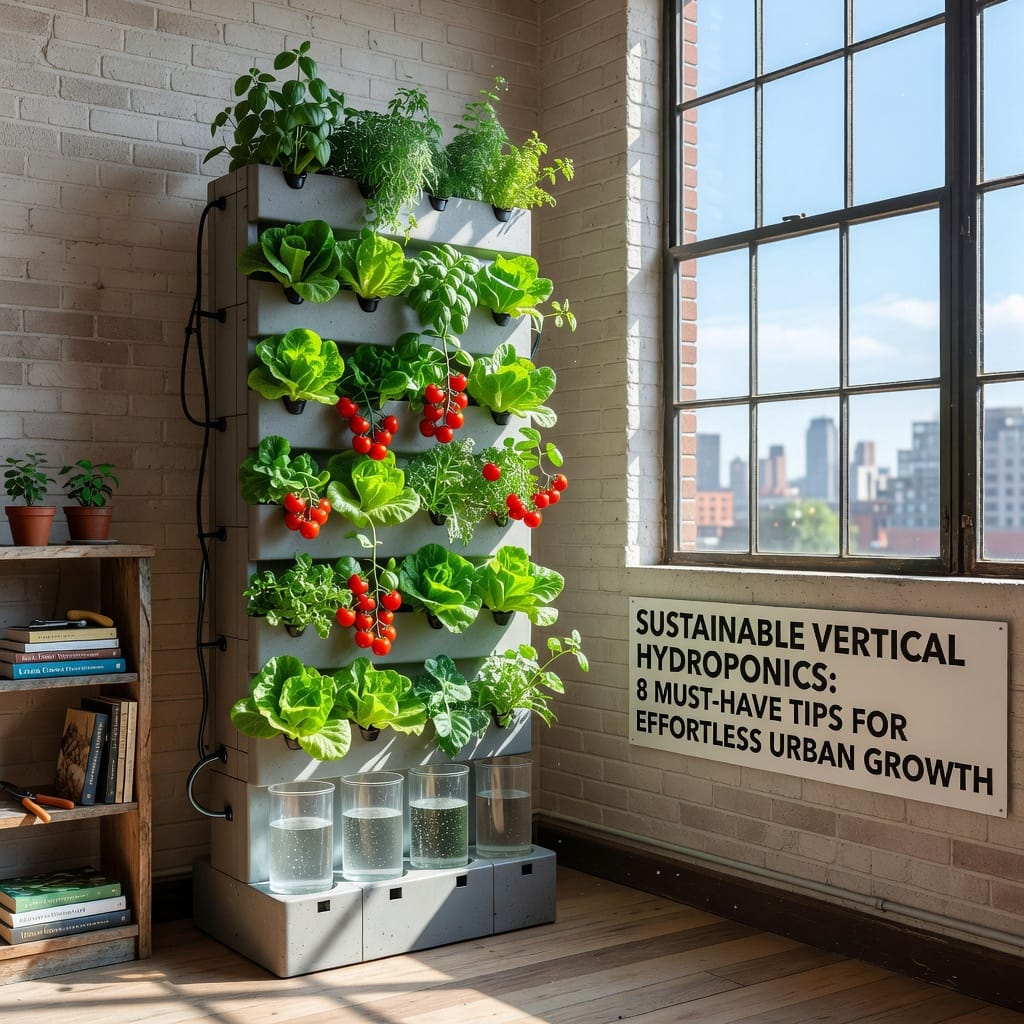
Consider your lifestyle too. If you’re busy, go for automated options with timers for watering and lights. Popular choices include PVC pipe towers or ready-made kits that stack trays vertically. These designs promote sustainability by recycling water through the system, reducing runoff.
For more guidance on selecting gear, check out our Beginner’s Guide to Hydroponic Systems. It’s packed with visuals to help you decide.
Start small to avoid overwhelm. Measure your space and sketch a quick layout. This step ensures your sustainable vertical hydroponics setup grows effortlessly without dominating your home.
One key factor is scalability. Begin with a four-tier tower holding about 20 plants. As you gain confidence, expand upward or add modules. Remember, vertical designs save floor space, making them ideal for apartments where every inch counts.
Sustainability shines here—opt for systems made from recycled plastics or bamboo frames. They last longer and keep your carbon footprint low. With the right choice, you’ll harvest fresh produce year-round, even in tight quarters.
Light is life in hydroponics, especially indoors where natural sun might be scarce. Sustainable vertical hydroponics demands smart lighting to mimic sunlight without spiking your electric bill.
LED grow lights are your best bet. They’re cooler, use less power, and target the wavelengths plants crave—blue for growth, red for flowering. Full-spectrum LEDs cover both, promoting healthy yields in stacked setups.
Position lights evenly across your vertical tower. Aim for 12-16 hours daily, depending on plant type. Timers automate this, ensuring consistency without guesswork.
To cut costs further, supplement with natural light. Place your system near a south-facing window if possible. This hybrid approach boosts sustainability by reducing reliance on artificial sources.
For a reliable option, consider the Spider Farmer SF-1000 LED Grow Light. It’s compact, energy-efficient, and perfect for small urban towers, delivering strong output without overheating.
Monitor plant response. Leaves turning pale? Up the intensity. Yellow tips? Dial it back. Fine-tuning keeps your sustainable vertical hydroponics humming along smoothly.
Over time, efficient lighting not only saves money but also lowers your environmental impact. It’s a win for your wallet and the planet.
Water is the backbone of hydroponics, and in sustainable vertical hydroponics, purity matters more than ever. City tap water often carries chlorine or heavy metals that can harm roots.
Test your water first. pH should hover between 5.5 and 6.5 for most plants. Use a simple kit to check—adjust with pH up or down solutions if needed.
Circulation prevents stagnation. Pumps push nutrient solution upward through your tower, then gravity pulls it back down. This closed loop recycles water, embodying the sustainability of vertical hydroponics.
Install a submersible pump rated for your system’s size. Clean filters regularly to avoid clogs. Aim for gentle flow—too fast stresses roots, too slow invites algae.
For nutrient delivery, choose organic hydroponic fertilizers. They’re biodegradable and support soil-free growth without chemicals leaching into drains.
A solid pump like the VicTsing Submersible Water Pump works wonders for small setups. It’s quiet, adjustable, and built to last, ensuring reliable circulation in your urban garden.
Reuse water where possible. Top off reservoirs with fresh only as needed. This tip alone slashes water use, making your sustainable vertical hydroponics truly eco-conscious.
Watch for signs of trouble, like wilting or foam on the surface. Quick tweaks keep everything balanced and productive.
Not all plants thrive in vertical hydroponics, so choose wisely for effortless growth. Sustainable vertical hydroponics shines with leafy greens and herbs that mature fast and stack well.
Start with lettuce, kale, or spinach. They love the constant moisture and nutrients, yielding harvests in 4-6 weeks. Basil and mint add flavor without fuss—their vines climb naturally up towers.
Avoid heavy feeders like corn; they’re better for horizontal gardens. Focus on compact varieties to maximize vertical space.
Spacing is crucial. In a tower, plant denser at the bottom where light is stronger, sparser at the top. This evens out growth across levels.
For sustainability, pick non-GMO seeds from reputable sources. They ensure robust plants that resist urban pests naturally.
If you’re expanding your plant knowledge, dive into our detailed Hydroponic Plant Selection Guide. It covers pairings that boost biodiversity in small spaces.
Rotate crops seasonally. Cool-weather greens in winter, heat-tolerant ones in summer. This keeps your system diverse and soil-free yields steady.
With the right picks, sustainable vertical hydroponics feels more like a hobby than a chore, delivering fresh eats straight to your plate.
Nutrients replace soil in hydroponics, so getting them right is key to sustainable vertical hydroponics. A balanced mix fuels growth without waste.
Use a complete hydroponic nutrient solution—nitrogen for leaves, phosphorus for roots, potassium for fruits. Start at half-strength for seedlings to avoid burn.
Monitor with an EC meter; it measures nutrient concentration. Ideal range: 1.0-2.5 mS/cm, varying by plant stage.
Change the reservoir every two weeks to prevent buildup. Flush with plain water periodically for a reset.
For eco-friendliness, opt for chelated minerals that plants absorb efficiently, minimizing runoff. Organic options like fish emulsion add microbes for healthier roots.
The General Hydroponics Flora Series is a three-part system that’s user-friendly and proven for vertical setups. Mix it easily for customized feeds.
Track pH daily—nutrients lock out if it’s off. Apps remind you, simplifying the routine.
Good management means fewer mistakes and bigger harvests. Your urban garden will reward the effort with vibrant, nutrient-packed produce.
Urban spaces invite bugs, but sustainable vertical hydroponics minimizes risks with proactive steps. No soil means fewer pests overall, but vigilance pays off.
Inspect plants weekly. Early spots like aphids or spider mites? Isolate affected ones.
Encourage beneficial insects. Ladybugs devour aphids naturally—release a few in your setup.
Neem oil is a go-to organic spray. Dilute and apply at dusk to avoid leaf burn. It’s safe for edibles and keeps things sustainable.
Cleanliness counts. Wipe towers with vinegar solution monthly to deter mold. Good airflow from fans prevents humidity buildup.
For integrated pest management, learn from experts. The University of California’s IPM resources offer practical, science-backed advice tailored to indoor growing.
If needed, introduce sticky traps for flyers. They’re non-toxic and effective in tight vertical spaces.
By staying ahead, you’ll avoid chemical sprays, preserving your sustainable vertical hydroponics as a clean, green method.
Who has time for constant tending? Automation makes sustainable vertical hydroponics effortless, especially in busy urban life.
Smart controllers adjust pH, nutrients, and lights based on sensors. WiFi-enabled ones let you monitor via app—check levels from work.
Timers for pumps and fans ensure rhythm without intervention. pH auto-dosing keeps balance precise.
Solar panels power small setups, boosting sustainability off-grid. Pair with batteries for cloudy days.
A versatile controller like the Inkbird ITC-308 Digital Thermostat isn’t just for temp—adapt it for broader hydro control. It’s affordable and reliable for beginners.
Start with basics: a timer and reservoir level alarm. Scale up as you go.
This tech frees you to enjoy the results, not the routine. Your vertical garden runs smoothly, yielding crops with minimal input.
Sustainable vertical hydroponics evolves with you. Keep a journal—note planting dates, yields, and tweaks. Patterns emerge, guiding improvements.
Weigh harvests to measure success. Aim for steady increases; adjust based on data.
Photos help too. Snap weekly shots to spot trends visually.
Join online communities for tips. Share your urban setup and learn from others’ sustainable vertical hydroponics journeys.
Seasonal audits refresh things. Winter might need more light; summer, better cooling.
Sustainability means adapting. Compost spent plants or donate extras to cut waste.
Over months, you’ll refine your system into a low-effort powerhouse. Fresh greens become routine, proving urban growth is within reach.
Embracing these tips transforms sustainable vertical hydroponics from a trend into a lifestyle. It’s about fresh food, less waste, and connecting with nature amid city hustle. Give it a try—you’ll wonder why you waited. Your balcony (or windowsill) is ready to bloom.