Vertical Hydroponic Tower vs Traditional Gardening: Water, Space, and Yield Comparison
If you’ve ever wanted to grow fresh produce at home but worried about limited yard space or high water bills, the choice between a vertical hydroponic tower and traditional gardening matters. Many people are turning to soilless systems for better efficiency, yet soil plots still hold appeal for some growers. Here’s a clear breakdown of how these two approaches stack up when it comes to water, space, and what you can actually harvest.
Water Usage: How Much Does Each Method Really Need?
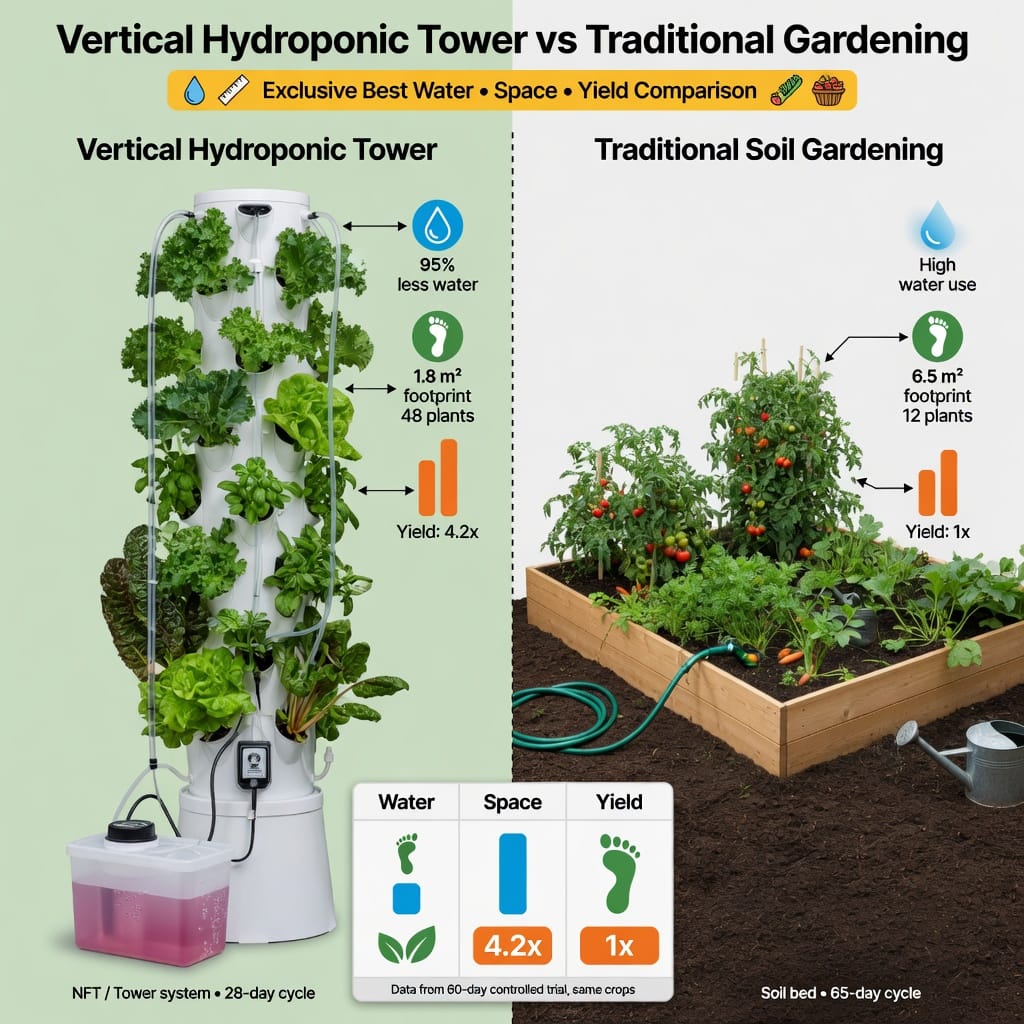
Traditional gardening relies on soil that holds moisture, but a lot still evaporates or runs off. In hot weather, you might water daily and lose up to 70 percent of that moisture before roots even use it. A vertical hydroponic tower recirculates nutrient-rich water through the system, so plants take what they need and the rest stays in the loop.
Studies show hydroponic setups can cut water use by 90 percent compared with in-ground beds. That matters if you live in a dry climate or want to keep utility costs down. With a tower, you add water every week or two rather than hauling hoses around every evening.
Traditional methods work fine when rain helps out, yet drought years force extra irrigation. The closed-loop design of a vertical hydroponic tower vs traditional gardening means fewer trips to the tap and less waste overall.
Space Requirements and Layout Flexibility
Soil gardens need flat, sunny ground. A small backyard plot might only fit a few rows of tomatoes and lettuce before you run out of room. Vertical towers stack plants upward, so the same footprint can hold 20 to 30 plants instead of four or five.
City dwellers or apartment residents often have balconies or patios but no yard. A single vertical hydroponic tower fits in a corner and still delivers a steady supply of greens. Traditional rows spread out horizontally, making them less practical when square footage is tight.
Think about pathways and access too. Raised beds require walking space between rows, while towers leave most of the floor clear. If your goal is maximizing every inch, the vertical approach wins on density without crowding roots.
Yield Potential Over a Growing Season
Yield numbers vary by crop and care level, but hydroponic towers often produce more per square foot. Leafy greens like spinach and kale grow faster because nutrients reach roots directly. Many tower users report harvesting every two to three weeks once plants mature.
Soil gardens give decent results with good compost and sunlight, yet weather swings, pests, and weeds can trim the total. One year of perfect conditions might match a tower, but averages over multiple seasons favor the controlled system. A vertical hydroponic tower vs traditional gardening comparison usually shows 30 to 50 percent higher output in the same area.
Root crops and heavy fruiting plants still perform better in soil for most home growers. Towers excel with herbs, lettuce, and strawberries. Matching the method to what you like to eat helps balance the numbers.
– Leafy greens: faster cycles in towers, steady soil harvests with more maintenance
– Herbs: compact and productive vertically
– Tomatoes or peppers: higher soil yields but need staking and more water
Setup and Daily Maintenance Differences
Building a basic soil garden starts with clearing ground and adding amendments. A vertical hydroponic tower arrives mostly assembled, needing only water, nutrients, and a light source. Initial cost for pumps and reservoirs runs higher than shovels and seeds, yet the tower pays off through reuse season after season.
Daily tasks look different too. Soil plots need weeding and pest checks. Towers require checking pH and topping off the reservoir, which takes minutes once you learn the routine. Both need consistent light, but towers let you add grow lights indoors if outdoor sun is limited.
For hands-on details about choosing the right model, see our guide on verticalhydrotower.com.
Crop Choices That Fit Each System
Not every plant thrives equally. Focus towers on fast-growing, shallow-root crops to keep things simple. Traditional beds handle larger or deeper vegetables without extra support.
Start small with either option. Mix a few tower greens with a small soil herb bed to test what works in your climate. Over time you can expand the method that matches your harvest goals.
Cost Breakdown Over Time
Soil gardening keeps upfront expenses low. Seeds, compost, and basic tools cover most needs. Towers involve the unit itself plus nutrients and occasional pump replacements. After the first year, operating costs drop because water and fertilizer use stay minimal.
Factor in time saved on weeding and watering. Many growers find the tower frees up weekends once the system runs smoothly. Soil beds reward patient soil building but demand ongoing physical work.
You can explore reliable starter kits like the Hydroponic Tower Garden System on Amazon, the Indoor Vertical Hydroponics Grow Tower also on Amazon, or the A-Frame Hydroponic Garden Kit available on Amazon for ready-to-use options.
Making the Switch or Combining Both
Plenty of gardeners use a tower for quick greens and keep a small soil area for root vegetables. That hybrid approach balances water savings with variety. If space stays tight, one or two well-managed towers often cover a family’s salad needs without a full plot.
The real win comes from matching your available room, water access, and favorite crops. Vertical hydroponic tower vs traditional gardening isn’t always an either-or decision once you see how each part performs.