As an Amazon Associate I earn a small commission from qualifying purchases made using links from this website.
Living in a bustling city doesn’t mean you have to give up on fresh, homegrown produce. Vertical farming hydroponics is changing the game for urban dwellers, turning tight spaces like apartments or rooftops into thriving green havens. Imagine harvesting crisp lettuce or juicy tomatoes right from your windowsill, without the hassle of soil or endless weeding. This method grows plants in nutrient-rich water, stacked in vertical towers to maximize every square inch.
If you’re new to this, vertical farming hydroponics offers a soil-less solution that’s efficient, sustainable, and perfect for city life. It uses less water than traditional gardening—up to 90% less—and can yield faster results. But getting started can feel overwhelming. That’s why I’ve put together these seven revolutionary tips. They’ll help you set up a system that’s not just productive but effortless, so you can enjoy urban yields with minimal daily fuss.
Whether you’re a beginner squeezing greens into a small balcony or scaling up for a community plot, these strategies will guide you. Let’s dive in and explore how vertical farming hydroponics can transform your space.
The foundation of successful vertical farming hydroponics starts with picking the right setup. In cities, space is premium, so go for modular towers that stack like building blocks. These systems let you grow upward instead of outward, ideal for balconies, kitchens, or even indoor corners.
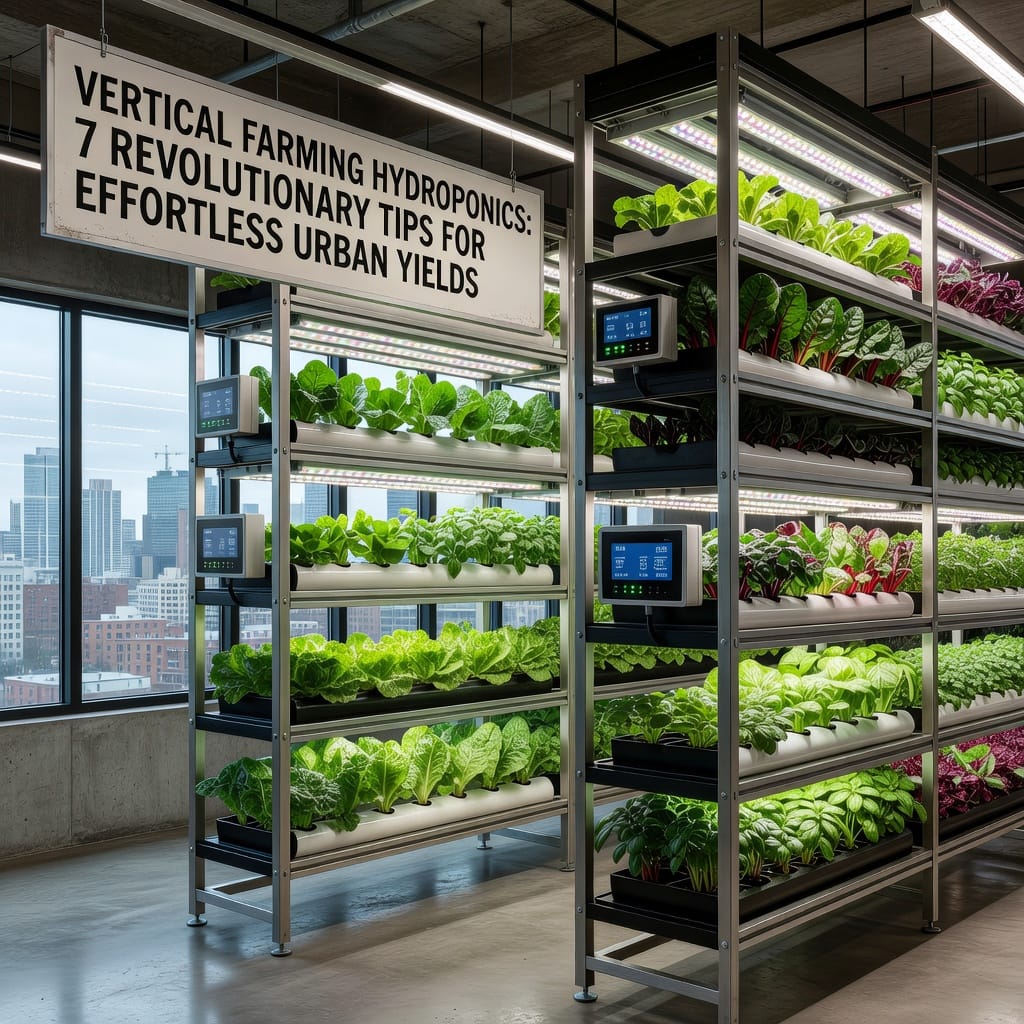
Think about your environment first. Do you have direct sunlight, or is it mostly shaded? For sunny spots, PVC pipe towers work great—they’re affordable and hold multiple plants per level. In low-light areas, opt for enclosed LED-lit units that mimic natural conditions.
One key to effortlessness is modularity. Choose systems where you can add or remove tiers as needed. This way, you scale with your experience level without overcommitting space.
For beginners, a simple five-tier hydroponic tower can produce enough greens for a family of four. It’s all about starting small to build confidence.
Don’t overlook portability. Wheels on your base allow easy movement to chase the best light throughout the day. This flexibility keeps your vertical farming hydroponics thriving no matter the season.
If you’re curious about the basics, check out our Beginner’s Guide to Hydroponics for more setup ideas tailored to urban setups.
Light is the lifeblood of vertical farming hydroponics, especially in urban areas where buildings block the sun. Natural light varies, but LEDs provide consistent, full-spectrum illumination that plants crave.
Full-spectrum LEDs mimic sunlight, supporting everything from vegetative growth to flowering. They’re energy-efficient too—using up to 50% less power than traditional bulbs—making them a smart choice for city electricity bills.
Position lights evenly across your tower to avoid shadows. Aim for 12-16 hours of light daily for most veggies, using timers to automate the cycle. This hands-off approach means no more guessing when to turn lights on or off.
Revolutionary part? Adjustable LEDs that you can dim or raise as plants grow taller. This prevents leggy stems and promotes bushy, healthy yields.
For a reliable option, consider the Spider Farmer SF-1000 LED Grow Light. It’s compact, perfect for vertical setups, and delivers strong output without overheating.
Investing in quality lighting pays off in effortless harvests, turning your vertical farming hydroponics into a 24/7 productivity machine, even through winter months.
In vertical farming hydroponics, water is your medium, but nutrients make the magic happen. Plants absorb what they need directly from the solution, leading to faster growth than soil-based methods.
The trick to effortlessness is automation. Drip systems or recirculating setups deliver precise nutrient mixes on a schedule, reducing manual checks.
Start with a balanced hydroponic nutrient formula—nitrogen for leaves, phosphorus for roots, and potassium for fruits. pH matters too; keep it between 5.5 and 6.5 for optimal uptake.
Monitor with simple digital testers. Apps now connect to sensors, alerting you if levels dip. This tech-forward approach keeps your system humming without constant intervention.
Revolutionary tip: Use aquaponic integrations if space allows. Fish waste provides natural nutrients, creating a closed-loop system that’s sustainable for urban living.
For essentials, grab the General Hydroponics FloraSeries Complete Nutrient System. It’s versatile for various crops and easy to mix.
With automated feeders, vertical farming hydroponics becomes set-it-and-forget-it, yielding bountiful urban produce week after week.
Water scarcity is a urban reality, but vertical farming hydroponics shines here. These systems recirculate water, using far less than traditional gardens—often just a gallon per tower per week.
Closed-loop designs prevent waste. Pumps cycle the solution through roots, absorbing nutrients and returning excess to the reservoir. Add a timer to run cycles sparingly, say 15 minutes every few hours.
To amp up efficiency, incorporate rain collection if you’re on a rooftop. Filtered city water works too, but always dechlorinate for plant health.
A game-changer is moisture sensors in each tray. They adjust flow based on real-time needs, ensuring no overwatering or dry spots.
For urban yields, this means more crop per drop, supporting sustainability goals. According to the Food and Agriculture Organization (FAO), such methods could feed growing cities with minimal resources—learn more on their urban agriculture page.
Pair your setup with the VIVOSUN 5-Tier Hydroponic Growing System for built-in recirculation that keeps things effortless.
Embracing water smarts in vertical farming hydroponics not only saves resources but boosts your confidence in city growing.
Pests love urban gardens too, but vertical farming hydroponics minimizes risks since there’s no soil for bugs to hide in. Still, aphids or spider mites can sneak in via air or tools.
Prevention is your best defense. Keep towers clean—wipe leaves weekly and quarantine new plants. Beneficial insects like ladybugs offer natural control without sprays.
Integrated pest management (IPM) is revolutionary here. Combine physical barriers, like fine mesh screens, with organic neem oil dips for early threats.
In hydroponics, monitor the reservoir; healthy pH deters most invaders. UV sterilizers in the water line zap pathogens effortlessly.
For city dwellers, this means safer, chemical-free yields. No worries about kids or pets munching on treated greens.
If you spot trouble, a quick rinse with diluted hydrogen peroxide revives most setups. This low-fuss method keeps vertical farming hydroponics pest-free and productive.
Why sweat the details when tech can handle vertical farming hydroponics? Automation turns hobby into high-yield habit with smart controllers managing pH, lights, and pumps from your phone.
Start with a basic hub that syncs devices. Set alerts for low nutrients or full reservoirs—peace of mind while you’re at work.
Advanced systems use AI to predict growth stages, adjusting conditions proactively. It’s like having a green-thumb assistant.
For urban ease, voice-activated setups integrate with smart homes. “Alexa, check my tower”—and get a status update.
This revolutionizes yields by optimizing 24/7, often doubling output over manual methods. Effortless? Absolutely, freeing you for enjoying the harvest.
Invest in scalable tech; begin simple and upgrade as your vertical farming hydroponics expands.
Not all plants thrive in vertical farming hydroponics, so choose wisely for effortless urban yields. Leafy greens like kale, spinach, and basil are stars—they grow fast, stack well, and need minimal support.
Herbs such as mint or cilantro fill gaps beautifully, adding flavor without overwhelming space. For fruits, cherry tomatoes or strawberries climb towers with trellises.
Rotate crops seasonally. Cool-weather lettuces in winter, heat-lovers like peppers in summer. This keeps production steady.
Revolutionary insight: Dwarf varieties bred for hydroponics mature quicker, harvesting in weeks not months. Succession planting—staggering seeds—ensures constant supply.
Experiment small; track what your light and space favor. Over time, you’ll curate a tower of favorites tailored to city life.
With smart crop picks, vertical farming hydroponics delivers fresh, local eats that beat store-bought every time.
Wrapping up these tips, it’s clear vertical farming hydroponics isn’t just a trend—it’s a practical way to green your urban world. Start with one or two ideas, tweak as you go, and watch your yields soar. Before long, you’ll be sharing homegrown bounty with neighbors, proving city living and fresh food go hand in hand. Ready to stack up? Your tower awaits.