Common Problems with Hydroponic Towers and How to Fix Them (Clogging, Algae, Pests)
Hydroponic towers make it possible to grow fresh produce in small spaces without soil. Still, even well-designed systems run into trouble now and then. The most frequent complaints involve clogged lines, algae blooms, and unwanted insects. Learning how to spot these issues early and apply simple fixes keeps your tower productive and your plants healthy.
Why Clogs Happen in Hydroponic Towers
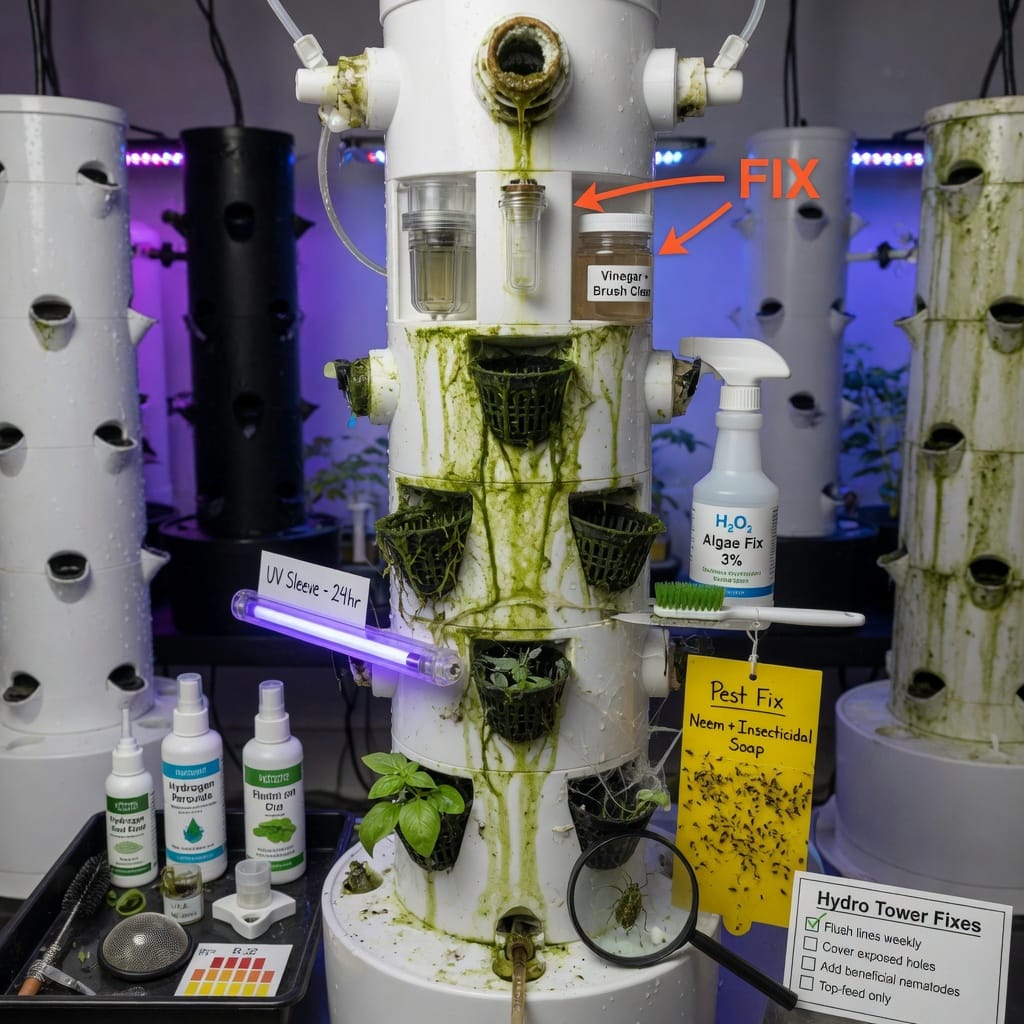
Roots, mineral buildup, and small debris are the usual suspects behind slow or stopped flow. When water cannot circulate freely, plants suffer from uneven nutrient delivery and can wilt quickly. Regular checks prevent most blockages before they become serious.
A good place to start is checking your pump and tubing every week. Look for root fragments or white crust near connectors. If you notice reduced flow, shut the system down and flush the lines with clean water. Many growers keep a small set of flexible brushes on hand for this task.
Quick Fixes for Clogging
– Switch to a finer mesh net pot or add a simple pre-filter on the pump intake.
– Run a monthly vinegar rinse (one part vinegar to three parts water) to dissolve mineral scale without harming plants.
– Trim roots that hang too low into the reservoir so they do not break off and travel through the lines.
You can also upgrade to a slightly stronger pump designed for vertical systems if your current model struggles with height. One reliable option is the AeroGarden Harvest Indoor Garden, which includes a pump sized for tower-style setups.
Algae Growth: The Green Invader
Algae thrive wherever light reaches standing water or wet surfaces. In towers this often means the reservoir or exposed tubing. While algae do not directly attack plants, they compete for nutrients and can clog emitters over time.
Darkening the reservoir is the simplest preventive step. Use an opaque lid or wrap the tank in black plastic. Keep the water level high enough that roots shade the surface too.
Practical Steps to Control Algae
– Add beneficial bacteria products labeled for hydroponics; they outcompete algae for resources.
– Wipe down any visible growth with a soft cloth and mild hydrogen peroxide solution during routine maintenance.
– Avoid leaving the system lights on 24 hours; a dark period helps limit algae the same way it helps your plants.
If you need a ready-made tower that already limits light exposure, the Lettuce Grow Farmstand uses a closed design that reduces algae risk from the start.
Pests That Target Tower Gardens
Even indoor systems attract aphids, spider mites, and fungus gnats. These pests often hitchhike on new seedlings or enter through open windows. Early detection makes control much easier.
Check the undersides of leaves during your weekly inspection. Sticky traps placed near the base of the tower catch flying insects and give you a quick count of what is present.
Safe Ways to Handle Pests
Start with the least toxic options. Neem oil sprays work well against soft-bodied insects and are safe for edible crops when used correctly. Introduce beneficial insects such as ladybugs or predatory mites if the infestation is more advanced.
Keep the growing area clean by removing dead leaves and wiping spills promptly. Good airflow from a small fan also discourages fungus gnats from laying eggs in moist media.
For a convenient neem product that mixes easily, many growers rely on Neem Oil Organic Insecticide. Apply it in the evening so leaves have time to dry before lights come back on.
Building a Simple Maintenance Routine
Create a short checklist you can follow every Sunday:
1. Inspect pump flow and clear any visible debris.
2. Wipe reservoir walls and check for algae.
3. Scan plants for pests and apply treatment if needed.
4. Top off nutrients and confirm pH is in range.
Spending ten minutes each week catches problems while they are still small. Over time you will learn the normal rhythm of your tower and notice changes faster.
If you are just getting started or want ideas for choosing the right system, read more on our site about vertical hydroponic tower systems. Pairing good habits with the right equipment turns common problems with hydroponic towers into minor speed bumps rather than major setbacks.