Have you ever dreamed of growing fresh veggies right in your living room, without the hassle of soil or outdoor weather? An indoor hydroponic garden makes that possible. It’s a smart way to bring nature inside, using water and nutrients to nurture plants effortlessly. Whether you’re a city dweller with limited space or just want to skip the dirt, setting up an indoor hydroponic garden can transform your home into a green oasis.
In this post, we’ll dive into the world of indoor hydroponic gardens and spotlight six top systems that make growing simple and rewarding. These picks are designed for beginners and pros alike, focusing on ease, efficiency, and great results. We’ll cover what each system offers, why it shines for indoor use, and tips to get started. By the end, you’ll feel ready to pick the perfect setup for your space.
Indoor hydroponic gardens are booming in popularity. They let you control everything—from light to nutrients—in a compact setup. No more worrying about pests or seasons; plants thrive year-round.
One big perk is space savings. Traditional gardens need plots of land, but hydroponics uses vertical or tabletop designs. This is ideal for apartments or small homes.
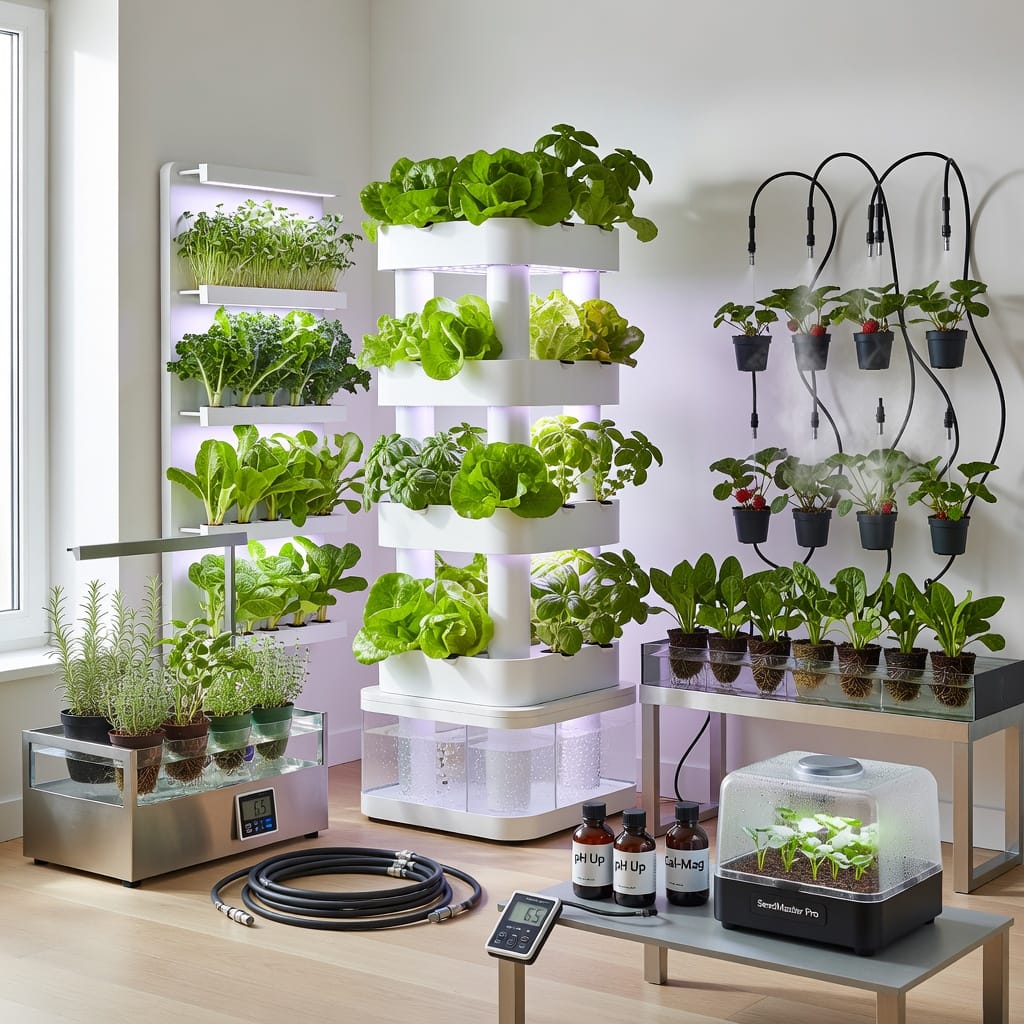
Plus, it’s eco-friendly. Hydroponic systems use up to 90% less water than soil gardening. They also cut down on chemical pesticides since you’re indoors.
If you’re new to this, don’t stress. Many systems come ready-to-use with timers and apps. For more basics, check out our beginner’s guide to hydroponics to build your knowledge.
Deep Water Culture, or DWC, is a straightforward entry into the indoor hydroponic garden world. Plants sit in net pots with roots dangling in oxygenated, nutrient-rich water. An air pump keeps things bubbling, ensuring roots get plenty of oxygen.
This system’s simplicity is its strength. No complex plumbing—just fill the reservoir, add nutrients, and watch growth happen. It’s perfect for herbs like basil or lettuces that love consistent moisture.
For an effortless setup, consider the VIVOSUN DWC Hydroponic System. It’s affordable and scalable, starting with a 5-gallon bucket for small indoor hydroponic gardens. Users rave about its quiet air pump and easy assembly.
Why does it shine indoors? DWC minimizes evaporation, key in dry home environments. Expect leafy greens ready in 4-6 weeks. Just monitor pH levels (aim for 5.5-6.5) to keep plants happy.
Pros:
– Low maintenance
– Great for beginners
– Fast growth rates
Cons:
– Needs regular water checks
– Not ideal for large plants
One tip: Place it near a window for natural light, or add LED grow lights for 12-16 hours daily.
Nutrient Film Technique, or NFT, flows a thin film of nutrient water past plant roots in slanted channels. Roots absorb what they need, and excess drains back to a reservoir. It’s like a gentle river for your indoor hydroponic garden.
NFT systems excel in efficiency. They use minimal water and space, stacking channels vertically for apartments. Vining plants like tomatoes or strawberries do well here, as roots stay aerated.
A standout option is the General Hydroponics WaterFarm. This modular kit lets you expand as your indoor hydroponic garden grows. It’s praised for durability and even nutrient distribution.
Indoors, NFT prevents root rot by keeping things flowing. Setup takes under an hour, and pumps handle the rest. Yields can double compared to soil methods.
To optimize, use a timer for 15-minute flood cycles. Clean channels weekly to avoid clogs.
Pros:
– Water-efficient
– Supports multiple plants
– Scalable design
Cons:
– Pump failure can be risky
– Best for smaller roots
If you’re into veggies, this system turns your kitchen counter into a mini farm.
Ebb and Flow systems, also called Flood and Drain, periodically flood a grow tray with nutrients, then drain it back. This soaks roots thoroughly before exposing them to air, mimicking natural watering cycles.
It’s versatile for an indoor hydroponic garden, handling everything from flowers to peppers. The flooding action delivers oxygen and nutrients evenly.
The Ivation Flood and Drain Kit is a must-have for home users. Compact and user-friendly, it includes a timer for automated cycles—ideal for busy folks.
Why effortless? Set it to flood every 4-6 hours, and you’re done. Indoor setups benefit from stable temps, reducing algae issues.
Plants like kale or cucumbers flourish here. Harvest times vary, but many are ready in 6-8 weeks.
Maintenance is light: Check the pump monthly and flush nutrients bi-weekly.
Pros:
– Even nutrient delivery
– Handles diverse plants
– Affordable automation
Cons:
– Requires level surface
– Potential for overwatering if mistimed
Pair it with a humidity dome for seedlings to boost success in your indoor hydroponic garden.
Drip systems deliver nutrients drop by drop to each plant’s base, like a slow, precise rain. Excess drains away, preventing sogginess. It’s customizable, making it a favorite for tailored indoor hydroponic gardens.
This method suits larger plants needing steady feed. Think peppers or herbs in individual pots.
The Active Aqua Drip Kit stands out with its adjustable emitters and recovery mat. It’s built tough for indoor use and easy to tweak for different pot sizes.
Effortless growth comes from the low-tech reliability—no constant monitoring needed. Drip lines connect to a basic pump, running on timers.
Indoors, it conserves space and water. Roots develop strong as drips encourage deep growth.
Tips: Use emitters rated for your plant count. Calibrate flow to 1-2 drips per second.
Pros:
– Precise control
– Recycles water
– Versatile for pots
Cons:
– Clogging possible
– Initial setup fiddly
For urban growers, this system fits seamlessly on shelves, expanding your indoor hydroponic garden without hassle.
Aeroponics mists nutrient solution directly onto roots in a misty cloud, using high-pressure sprayers. No medium holds roots; they hang free in air. It’s high-tech for the ultimate indoor hydroponic garden.
This system maximizes oxygen exposure, leading to explosive growth—up to 30% faster than others. Vertical towers save floor space, stacking plants sky-high.
The Tower Garden by Agrotonomy is a premium pick. It’s aeroponic at heart, with a central tower for 20+ plants. App integration tracks everything for effortless management.
Indoors, it’s energy-efficient with LED compatibility. Great for microgreens or lettuces, ready in weeks.
Why must-have? Minimal water use (95% savings) and no soil mess. Roots stay clean and healthy.
Setup involves assembling the tower and filling the base. Run misters every few minutes via timer.
Pros:
– Rapid growth
– Space-saving vertical design
– Low water needs
Cons:
– Higher upfront cost
– Needs reliable power
If sustainability matters, aeroponics aligns perfectly with modern indoor hydroponic gardens.
For more on vertical setups, see our guide on stackable hydroponic systems.
Smart pod systems use pre-seeded pods in self-contained units, blending hydroponics with automation. Lights, water, and nutrients adjust via apps—true effortless growth for your indoor hydroponic garden.
These are plug-and-play, ideal for tech-savvy beginners. Pods for basil, tomatoes, or flowers slot in easily.
The AeroGarden Harvest is unbeatable here. With a sleek design and touch controls, it grows up to nine plants. Vacation mode keeps things running while you’re away.
Indoors, its compact footprint fits counters or desks. Built-in LEDs provide full-spectrum light, mimicking sunlight.
Yields are impressive: Fresh herbs in 3-4 weeks. The app reminds you when to add nutrients.
Pros:
– Fully automated
– No guesswork
– Aesthetic appeal
Cons:
– Pods add recurring costs
– Limited to pod varieties
Expand with add-ons like trellises for climbers. It’s a game-changer for small indoor hydroponic gardens.
Picking a system boils down to your goals and setup. Got a sunny windowsill? DWC or pods work great. Limited floor space? Go vertical with NFT or aeroponics.
Consider plant types too. Leafy greens suit most, while fruiting ones need robust support like ebb and flow.
Budget matters—start under $100 for basic kits, up to $500 for smart towers. All our picks deliver value through longevity.
Lighting is key indoors. Invest in full-spectrum LEDs; they pair well with any indoor hydroponic garden system. For reliable options, check the University of Minnesota’s hydroponics guide for science-backed tips.
Maintenance across systems is similar: Monitor pH, change reservoirs every 1-2 weeks, and prune as needed.
No indoor hydroponic garden thrives without the right fuel. Use balanced hydroponic nutrients—nitrogen for leaves, phosphorus for roots. Brands like General Hydroponics offer starter kits.
Dilute per instructions; overfeeding burns roots. Test water weekly with affordable kits.
Lighting seals the deal. Aim for 14-18 hours daily. For a solid entry-level light, the Spider Farmer SF-1000 covers small setups effectively.
Position lights 12-18 inches above plants, adjusting as they grow. Timers prevent burnout.
Ventilation matters too. Fans circulate air, strengthening stems and deterring mold in your indoor hydroponic garden.
Every indoor hydroponic garden hits snags, but they’re fixable. Yellow leaves? Check pH—too high or low blocks nutrient uptake. Adjust with buffers.
Algae growth? Cover reservoirs to block light. It’s common but harmless if managed.
Pests are rare indoors, but spider mites sneak in. Neem oil sprays handle them gently.
Power outages pause systems, so backup batteries for pumps are smart.
Troubleshoot step-by-step: Inspect roots first—they tell the health story. Clean setups prevent most issues.
Take Sarah, a NYC apartment dweller. Her AeroGarden turned her counter into a salad bar, yielding weekly harvests. “It’s effortless,” she says. “No more store-bought wilted greens.”
Or Mike, who scaled a DWC system to feed his family. “From zero to hero in months,” he shares.
These tales show indoor hydroponic gardens fit real lives—boosting wellness through homegrown food.
Start small, then grow. Add modules to NFT or towers as confidence builds. Track progress in a journal: What worked? Tweak from there.
Community helps too. Forums and local groups share tips on expanding your indoor hydroponic garden.
Sustainability bonus: Home growing cuts your carbon footprint by reducing store-bought produce transport.
Diving into an indoor hydroponic garden opens doors to fresh, homegrown bounty without the fuss. From DWC simplicity to smart pod automation, these six systems offer paths for every style.
Pick one that sparks joy, set it up, and let nature do its thing. Soon, you’ll savor the rewards of your own effortless harvest. Happy growing—your indoor oasis awaits.